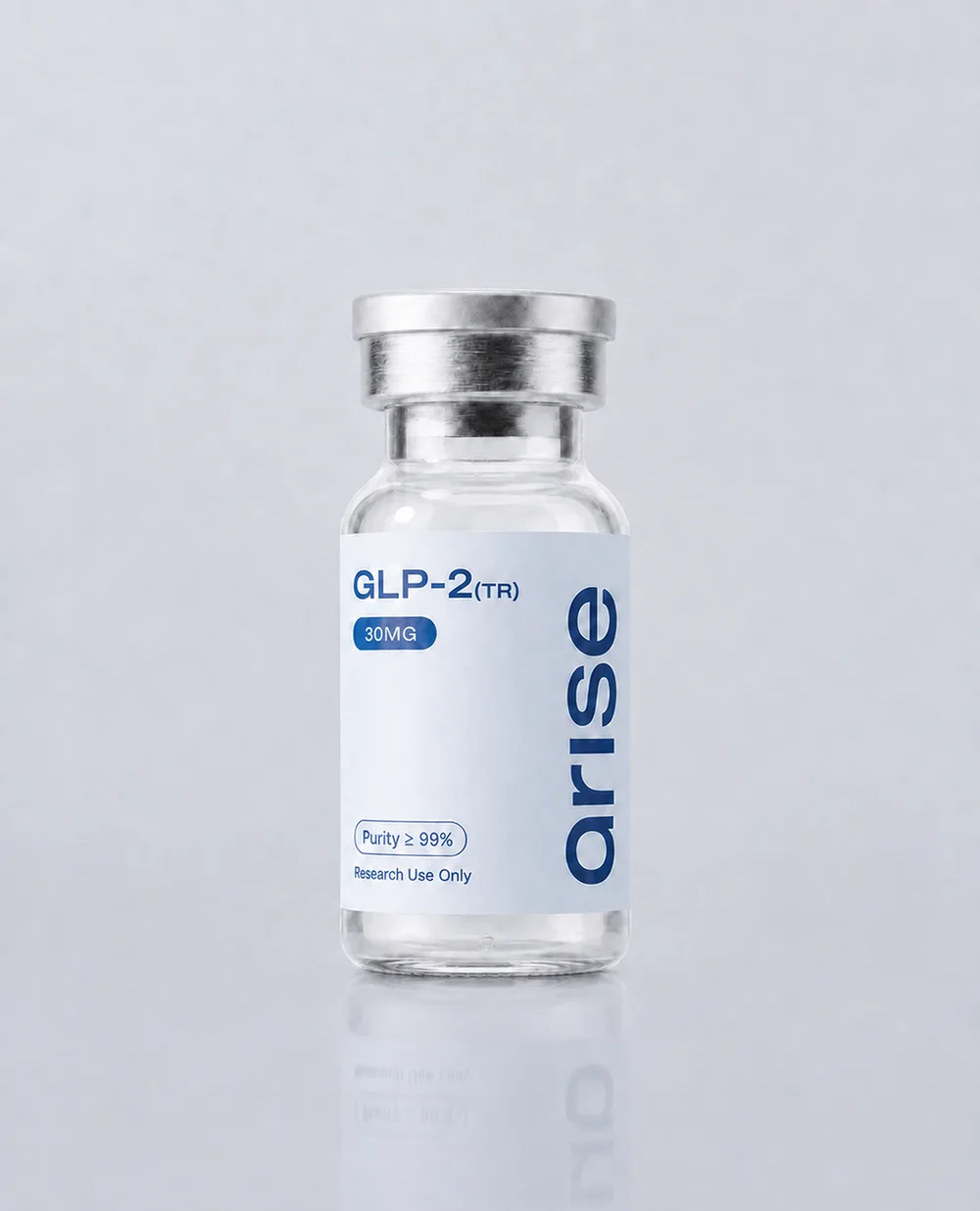
GLP-2(TR)
30MGDual GIP/GLP-1 receptor agonist peptide.
Volume tiers count vials of this compound at this strength. Mixing different compounds does not combine toward a tier.
- ≥99% purity specification
- Secure checkout
- Ships in 1 business day
- Research use only
Released against a ≥99% HPLC purity specification and supplied as a sealed laboratory reagent for in vitro research use only.
- Type
- Dual GIP / GLP-1 receptor agonist peptide
- Molecular weight
- 4813.5 g/mol
- Amino acids
- 39
- Form
- Lyophilized powder
- Vial strength
- 30MG
- Purity specification
- ≥99% by HPLC
Identifiers are published properties of the molecule. Values we cannot confirm are omitted rather than estimated.
Dispatch
Ships within 1 business day of order confirmation, from the US. Vials ship lyophilized at ambient temperature; move them to the storage condition below on arrival.
Lyophilized
Store at -20°C, protected from light. Stable 24+ months sealed.
Reconstituted
Store at 2-8°C. Use within approximately 30 days.
How GLP-2(TR) is described to act.
GLP-2(TR) is a fatty-acid-modified synthetic peptide engineered to bind both the glucose-dependent insulinotropic polypeptide (GIP) receptor and the glucagon-like peptide-1 (GLP-1) receptor. Receptor-occupancy and signaling studies in cell lines reported imbalanced engagement favouring the GIP receptor, together with biased signaling at the GLP-1 receptor that favours cAMP generation over beta-arrestin recruitment and produces weaker receptor internalisation than native GLP-1. In primary islet preparations, beta-arrestin1 constrained the insulin response to GLP-1 but not to GIP or to GLP-2(TR), which the authors proposed as a basis for the compound's distinct pharmacology. In human adipocyte and diet-induced obese mouse models, long-acting GIP receptor agonism was reported to modulate adipocyte nutrient handling differentially according to insulin state.
Mechanistic descriptions summarize published in vitro and animal work. They are not a representation of efficacy or safety in any subject, and no administration guidance is given or implied.
Discovery-stage characterisation in vitro and in mice described activation of both incretin receptors with glucose-dependent insulin secretion and altered glucose tolerance, followed by a phase 1 programme in healthy participants and in participants with type 2 diabetes. The phase 3 SURPASS-1 trial measured mean change in glycated haemoglobin from baseline at 40 weeks in adults with type 2 diabetes inadequately controlled by diet and exercise. A post hoc analysis of a phase 2 dataset examined fasting biomarkers of beta-cell function and insulin resistance at 26 weeks, reporting changes in HOMA2-B, proinsulin ratios, HOMA2-IR, and adiponectin, IGFBP-1 and IGFBP-2. A review of the SURPASS 1-5 programme summarised the reported ranges of change in glycated haemoglobin and body weight and catalogued gastrointestinal events as the most commonly reported adverse events. Preclinical adipose tissue work attributed part of the observed metabolic profile to sustained GIP receptor activation rather than to GLP-1 receptor activity alone. A 112-week phase 3b trial at 20 US sites (SURMOUNT-MAINTAIN) followed a 60-week open-label weight-reduction period with a 52-week double-blind maintenance period, comparing continuation at the maximum tolerated dose, reduction to a lower dose, and a switch to placebo, with maintenance of the bodyweight reduction already achieved as the endpoint. A network meta-analysis of randomised trials of at least 12 weeks assessed 24 outcomes across obesity pharmacotherapies using GRADE and the Cochrane Risk of Bias 2 tool. Two population-based, new-user active-comparator cohort analyses examined severe gastrointestinal events including acute pancreatitis against dulaglutide and semaglutide, and major adverse cardiovascular events in adults with type 2 diabetes and atherosclerotic cardiovascular disease. A systematic review and meta-analysis of randomised placebo-controlled trials examined obesity-related cancer outcomes for GLP-1 receptor agonists and dual agonists as a class. A retrospective cohort drawn from electronic health records tracked fat-free mass, fat mass and their ratio over 24 months after bariatric surgery or GLP-1 receptor agonist treatment, an endpoint class the registration programme's weight and glycaemic outcomes did not capture.
Cited literature is provided for scientific reference only and does not constitute a representation of efficacy or safety in any subject. All research findings presented are sourced from peer-reviewed journals and are provided for educational reference only.
Bench handling, not a dosing guide.
Intended use
Supplied exclusively as a research reagent for in vitro and laboratory use by qualified researchers. Not a drug, dietary supplement, cosmetic or medical device, and not for human or veterinary use. No dosing, route or administration guidance is provided for any compound in this catalog.
Personal protection
Handle in a controlled laboratory environment with gloves and eye protection. Avoid generating or inhaling airborne particulate when opening a vial, and do not handle the material outside a designated work area.
Opening and reconstitution
Lyophilized peptides are hygroscopic. Let the sealed vial equilibrate to room temperature before opening so atmospheric moisture does not condense onto the powder. Reconstitute by directing diluent down the vial wall and swirling until dissolved — do not shake, which shears and foams the peptide.
Stability and aliquoting
Store at -20°C, protected from light. Stable 24+ months sealed. Store at 2-8°C. Use within approximately 30 days. Aliquot reconstituted material and minimize repeated freeze-thaw cycles.
Waste disposal
Dispose of unused material, reconstituted solutions and sharps through your institution's chemical and biological waste stream, in accordance with local regulations. Do not dispose of research material in domestic waste or to drain.
Others in metabolic research
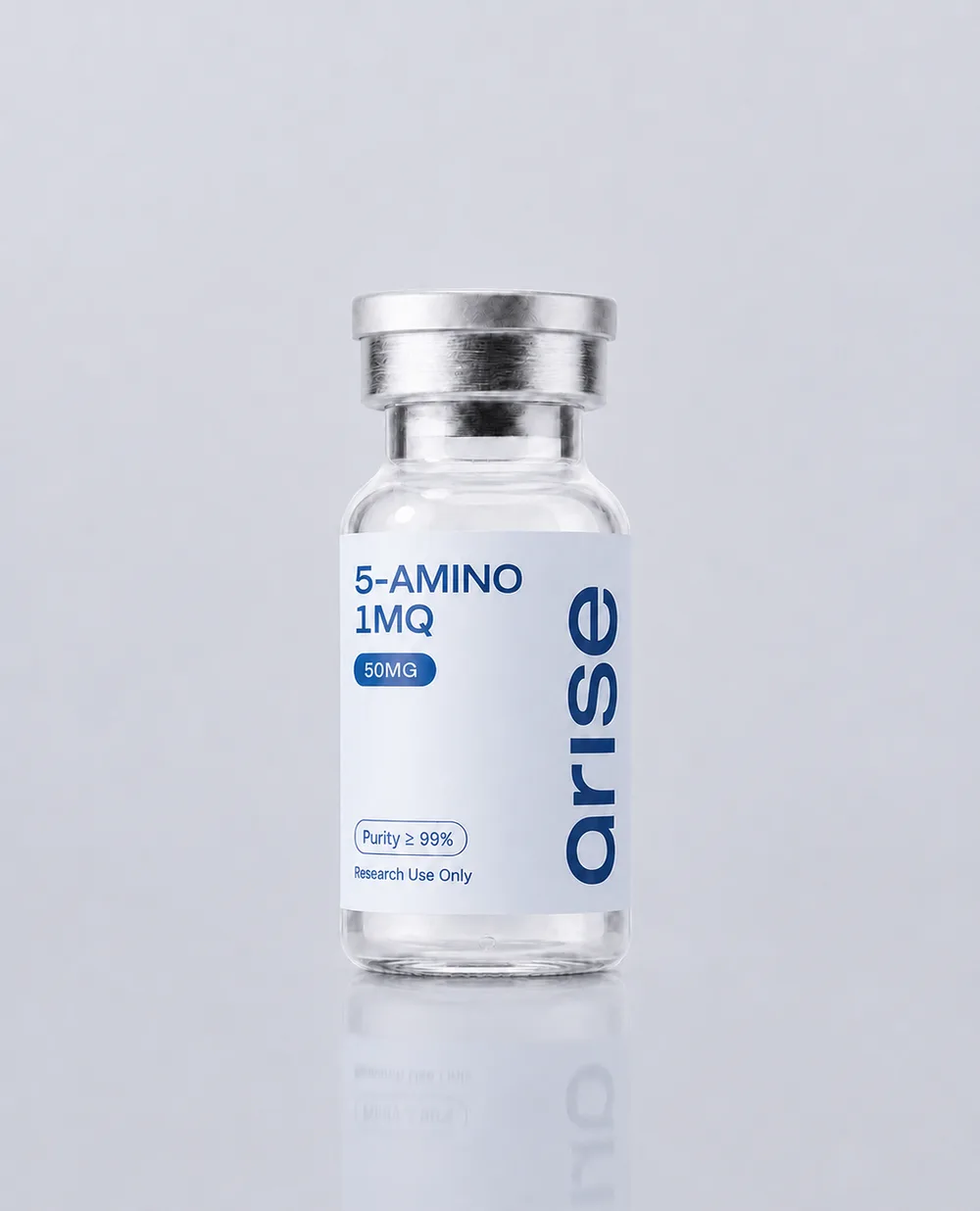
5-Amino 1MQ
Small-molecule methylquinolinium research compound.
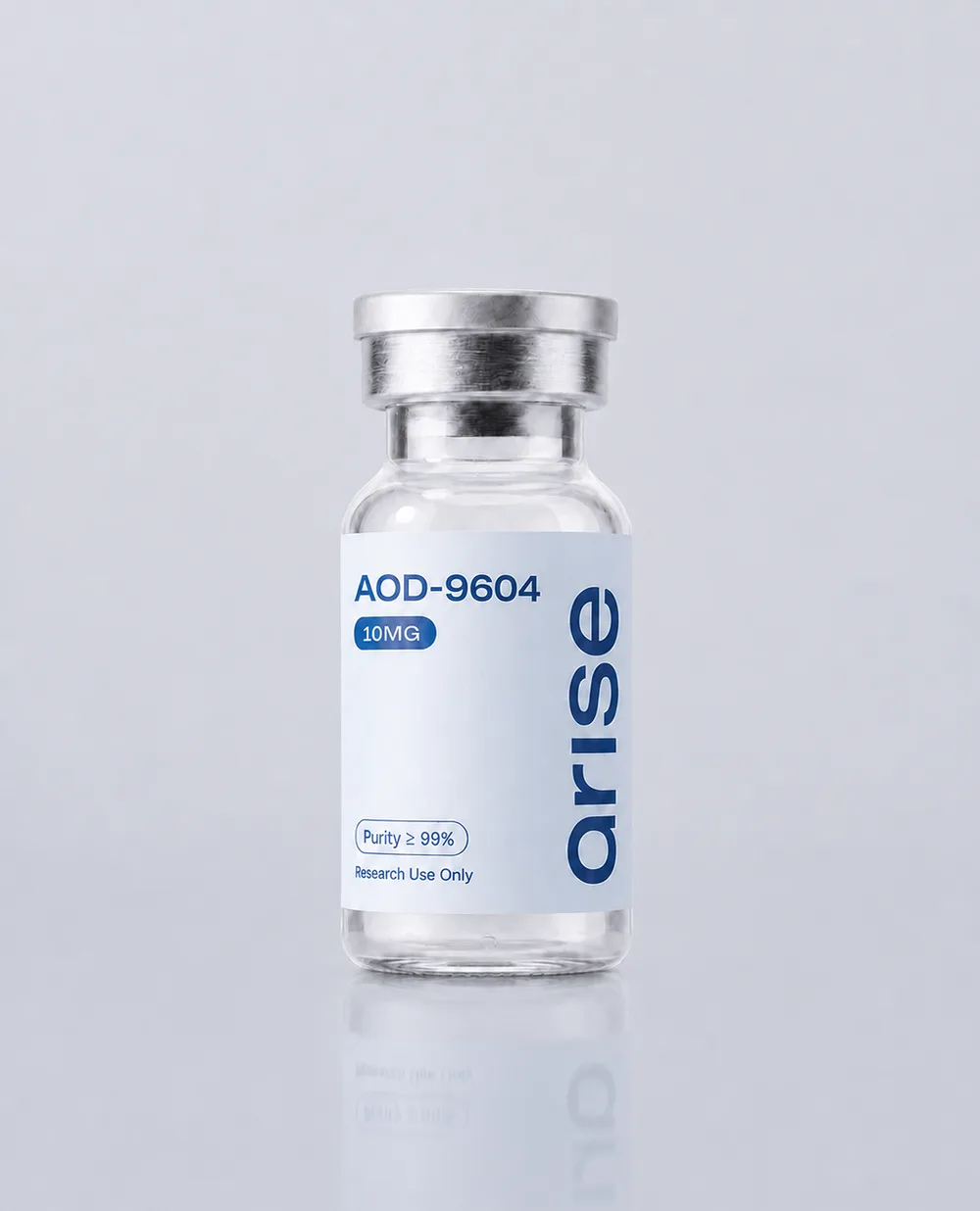
AOD-9604
HGH fragment 176-191 analog.
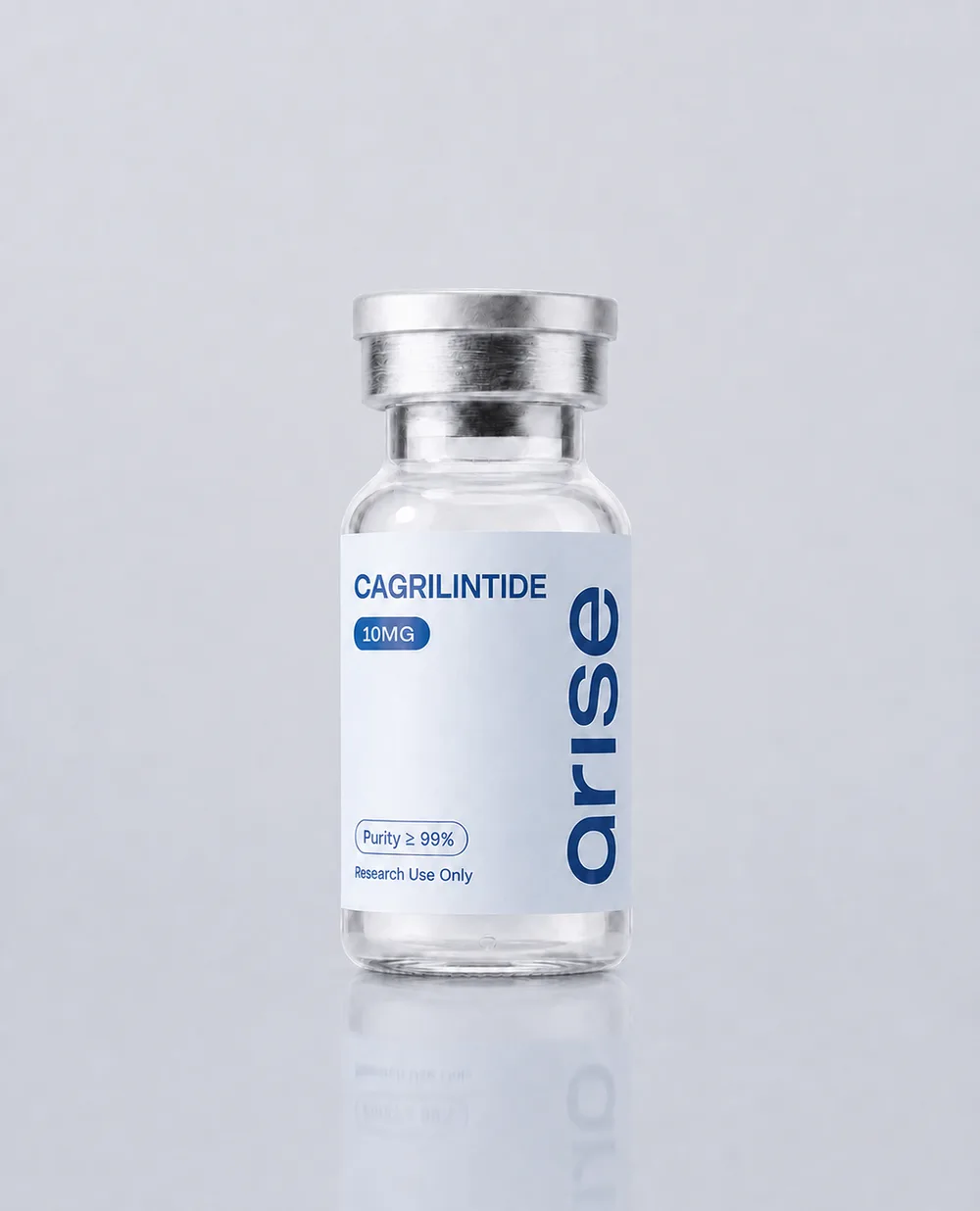
Cagrilintide
Long-acting amylin analog.
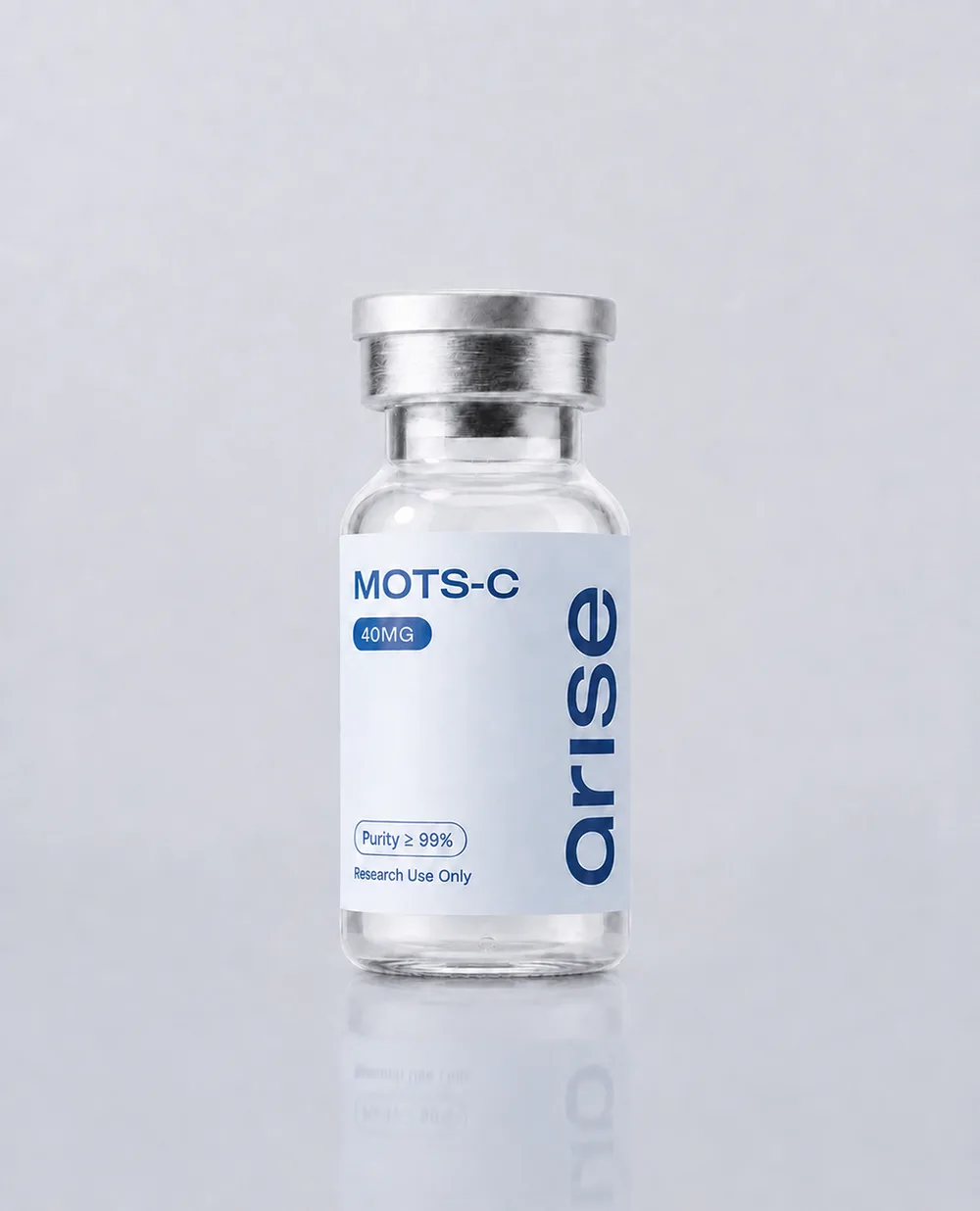
MOTS-C
16-residue mitochondrial-derived peptide.
Important research notice
Not for human consumption. This product is sold exclusively for research and educational purposes. It is not intended to diagnose, treat, cure, or prevent any disease.
This material is supplied exclusively as a research reagent for in vitro and laboratory use by qualified researchers. It is not a drug, dietary supplement, cosmetic, or medical device, is not intended for human or veterinary use, and is not intended to diagnose, treat, cure, or prevent any disease. No dosing, administration, therapeutic, or benefit claims are made or implied. Cited literature is provided for scientific reference only and does not constitute a representation of efficacy or safety in any subject.
By purchasing this product, you confirm that you are a qualified researcher and will use it in accordance with all applicable laws and regulations.