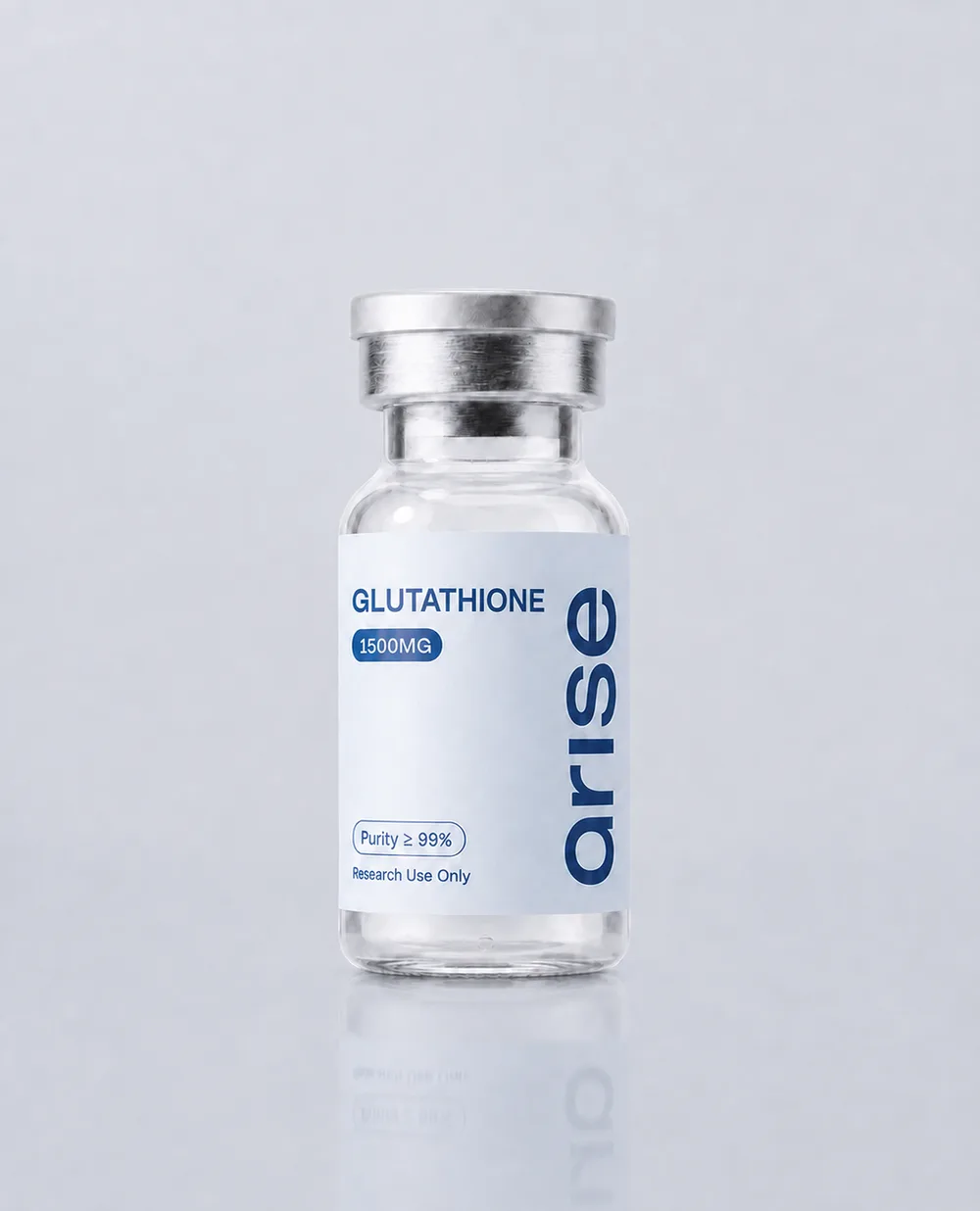
Glutathione
1500MGReduced L-glutathione tripeptide.
12 peer-reviewed citations for this compound
Read the sourcesVolume tiers count vials of this compound at this strength. Mixing different compounds does not combine toward a tier.
- ≥99% purity specification
- Secure checkout
- Ships in 1 business day
- Research use only
Released against a ≥99% HPLC purity specification and supplied as a sealed laboratory reagent for in vitro research use only.
- Type
- Reduced L-glutathione tripeptide
- CAS number
- 70-18-8
- Molecular formula
- C10H17N3O6S
- Molecular weight
- 307.32 g/mol
- Amino acids
- 3
- Sequence
- Glu-Cys-Gly
- Form
- Lyophilized powder
- Vial strength
- 1500MG
- Purity specification
- ≥99% by HPLC
Identifiers are published properties of the molecule. Values we cannot confirm are omitted rather than estimated.
Dispatch
Ships within 1 business day of order confirmation, from the US. Vials ship lyophilized at ambient temperature; move them to the storage condition below on arrival.
Lyophilized
Store at -20°C, protected from light. Stable 24+ months sealed.
Reconstituted
Store at 2-8°C. Use within approximately 30 days.
How Glutathione is described to act.
Glutathione (gamma-L-glutamyl-L-cysteinyl-glycine, GSH) is the most abundant low-molecular-weight cellular thiol, and the GSH/glutathione disulfide couple constitutes the major intracellular redox buffer in animal cells. Synthesis occurs exclusively in the cytosol via two sequential ATP-dependent steps catalyzed by gamma-glutamylcysteine synthetase (glutamate-cysteine ligase) and glutathione synthetase, with the first step rate-limiting and subject to feedback inhibition by GSH and to cysteine availability. Most of its antioxidant function is executed through GSH-dependent enzymes rather than direct scavenging: glutathione peroxidases reduce hydrogen peroxide, organic and lipid hydroperoxides and peroxynitrite, glutathione S-transferases conjugate electrophiles for export, and glutaredoxins reverse protein S-glutathionylation. Because GPX4 uses GSH as its cofactor to convert phospholipid hydroperoxides to lipid alcohols, GSH sits directly upstream of ferroptotic cell death.
Mechanistic descriptions summarize published in vitro and animal work. They are not a representation of efficacy or safety in any subject, and no administration guidance is given or implied.
Nutritional and metabolic work reviewed in this set reports that tissue GSH homeostasis depends on adequate protein and sulfur amino acid supply, and that cystine, methionine, N-acetylcysteine and L-2-oxothiazolidine-4-carboxylate act as cysteine precursors for GSH synthesis in animal and human studies. Organellar proteomics and metabolomics in mammalian cells identified SLC25A39 as the mitochondrial carrier required for GSH import; its loss reduced mitochondrial GSH import and abundance without altering whole-cell GSH, and combined loss with the paralogue SLC25A40 produced defects in the activity and stability of iron-sulfur cluster proteins. In neurons, GSH production is reported to depend on the sodium-dependent glutamate/cysteine transporter EAAC1, whose expression is post-translationally controlled by GTRAP3-18 and miR-96-5p, and brain GSH depletion is a common finding in Alzheimer disease and Parkinson disease. Cancer biology work reports that upregulated GSH synthesis and GPX4 activity function as a ferroptosis-resistance mechanism against chemotherapy- and radiotherapy-induced oxidative stress. Gerontology reviews describe age-associated shifts in the GSH/GSSG ratio and in glutathione-dependent enzyme activity as a recurring observation across tissues. A review of oral supplementation weighs reported reductions in oxidative stress against the limitations of the oral route, and a scoping review in the dermatology literature examines the evidence base for systemic glutathione used for skin lightening. Bioavailability work comparing a liposomal formulation against plain glutathione in cellular and human models addresses the gastrointestinal degradation and low membrane permeability that constrain the unmodified tripeptide. A study in 41 adolescents with poorly controlled type 1 diabetes tested whether improved glycaemic control, alone or combined with dietary antioxidants, would restore the erythrocyte glutathione pool; neither restored blood glutathione nor the oxidative stress markers 3-nitrotyrosine, F2-isoprostane and 8-hydroxy-2'-deoxyguanosine, a null result reported against the authors' own hypothesis. In 21-month-old mice fed glycine and N-acetylcysteine for 12 weeks, cardiac function and exercise performance were followed longitudinally and the response differed by sex. A further review examines efficacy and safety endpoints for supplementation in HIV infection and HIV-tuberculosis co-infection, settings in which glutathione deficiency is a documented feature.
Sources & references
Cited literature is provided for scientific reference only and does not constitute a representation of efficacy or safety in any subject. All research findings presented are sourced from peer-reviewed journals and are provided for educational reference only.
- 01A review of the potential benefits and limitations of oral glutathione supplementation
Fathizadeh H, et al. · Inflammopharmacology, 2026
- 02Systemic glutathione for skin lightening - A scoping review of current evidence
Dlova NC, et al. · J Eur Acad Dermatol Venereol, 2026
- 03
- 04
- 05Glutathione metabolism in ferroptosis and cancer therapy
Xue X, et al. · Cancer Lett, 2025
- 06Sex Differences in Response to Diet Enriched With Glutathione Precursors in the Aging Heart
Angelini A, et al. · J Gerontol A Biol Sci Med Sci, 2025
- 07Mitochondrial Glutathione in Cellular Redox Homeostasis and Disease Manifestation
Chen TH, et al. · Int J Mol Sci, 2024
- 08
- 09
- 10
- 11
- 12Glutathione metabolism and its implications for health
Wu G, et al. · J Nutr, 2004
Every entry links to its record at the publisher or on PubMed. Titles are reproduced exactly as published.
Further searches
Live database searches for Glutathione, run against the current index and retrieved independently of this site.
Bench handling, not a dosing guide.
Intended use
Supplied exclusively as a research reagent for in vitro and laboratory use by qualified researchers. Not a drug, dietary supplement, cosmetic or medical device, and not for human or veterinary use. No dosing, route or administration guidance is provided for any compound in this catalog.
Personal protection
Handle in a controlled laboratory environment with gloves and eye protection. Avoid generating or inhaling airborne particulate when opening a vial, and do not handle the material outside a designated work area.
Opening and reconstitution
Lyophilized peptides are hygroscopic. Let the sealed vial equilibrate to room temperature before opening so atmospheric moisture does not condense onto the powder. Reconstitute by directing diluent down the vial wall and swirling until dissolved — do not shake, which shears and foams the peptide.
Stability and aliquoting
Store at -20°C, protected from light. Stable 24+ months sealed. Store at 2-8°C. Use within approximately 30 days. Aliquot reconstituted material and minimize repeated freeze-thaw cycles.
Waste disposal
Dispose of unused material, reconstituted solutions and sharps through your institution's chemical and biological waste stream, in accordance with local regulations. Do not dispose of research material in domestic waste or to drain.
Others in longevity & cellular
Epithalon
Synthetic tetrapeptide Ala-Glu-Asp-Gly.
FOXO4
FOXO4-p53 interfering peptide, D-retro-inverso.
Humanin
24-residue mitochondrial-derived peptide.
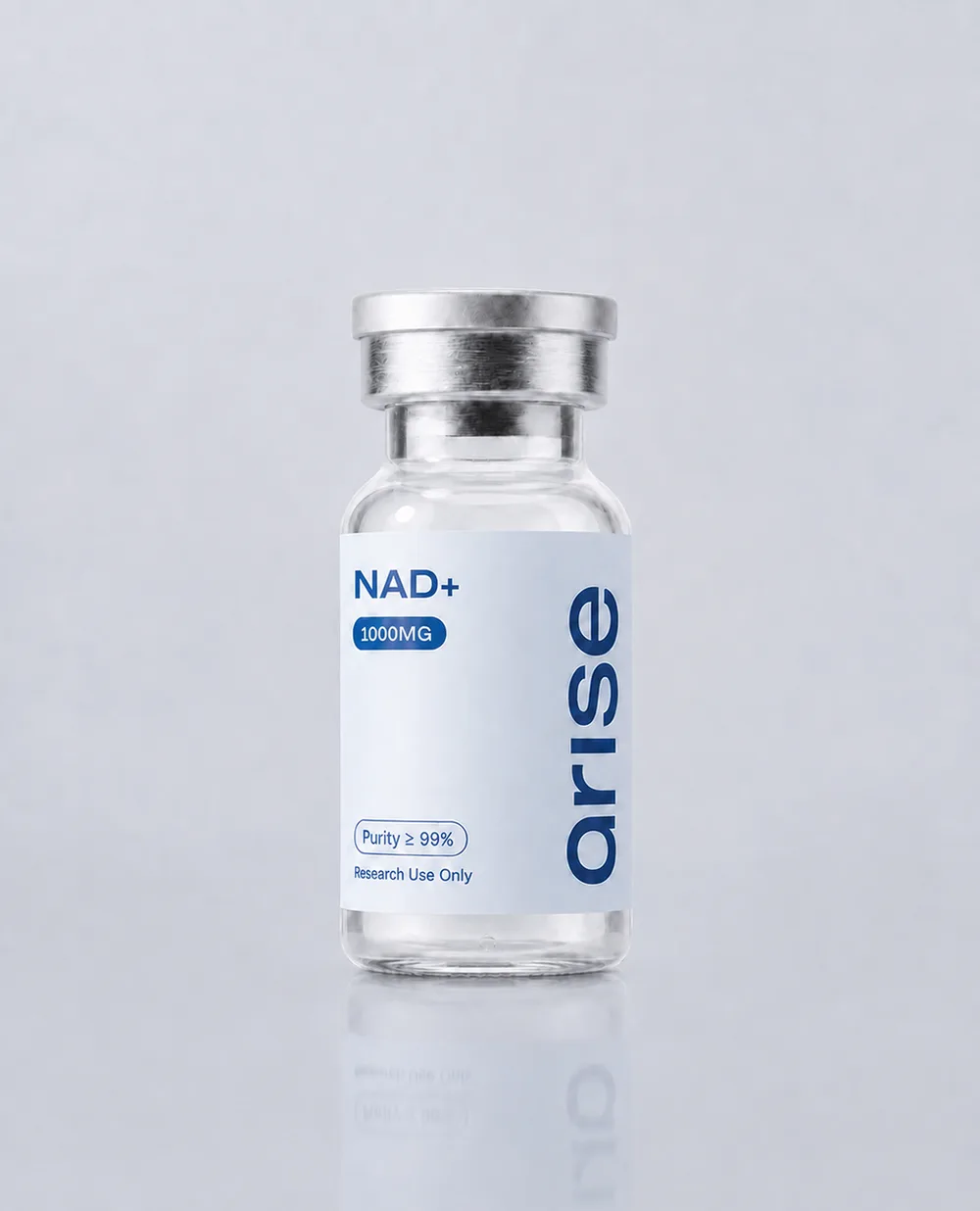
NAD+
Nicotinamide adenine dinucleotide, oxidized.
Important research notice
Not for human consumption. This product is sold exclusively for research and educational purposes. It is not intended to diagnose, treat, cure, or prevent any disease.
This material is supplied exclusively as a research reagent for in vitro and laboratory use by qualified researchers. It is not a drug, dietary supplement, cosmetic, or medical device, is not intended for human or veterinary use, and is not intended to diagnose, treat, cure, or prevent any disease. No dosing, administration, therapeutic, or benefit claims are made or implied. Cited literature is provided for scientific reference only and does not constitute a representation of efficacy or safety in any subject.
By purchasing this product, you confirm that you are a qualified researcher and will use it in accordance with all applicable laws and regulations.