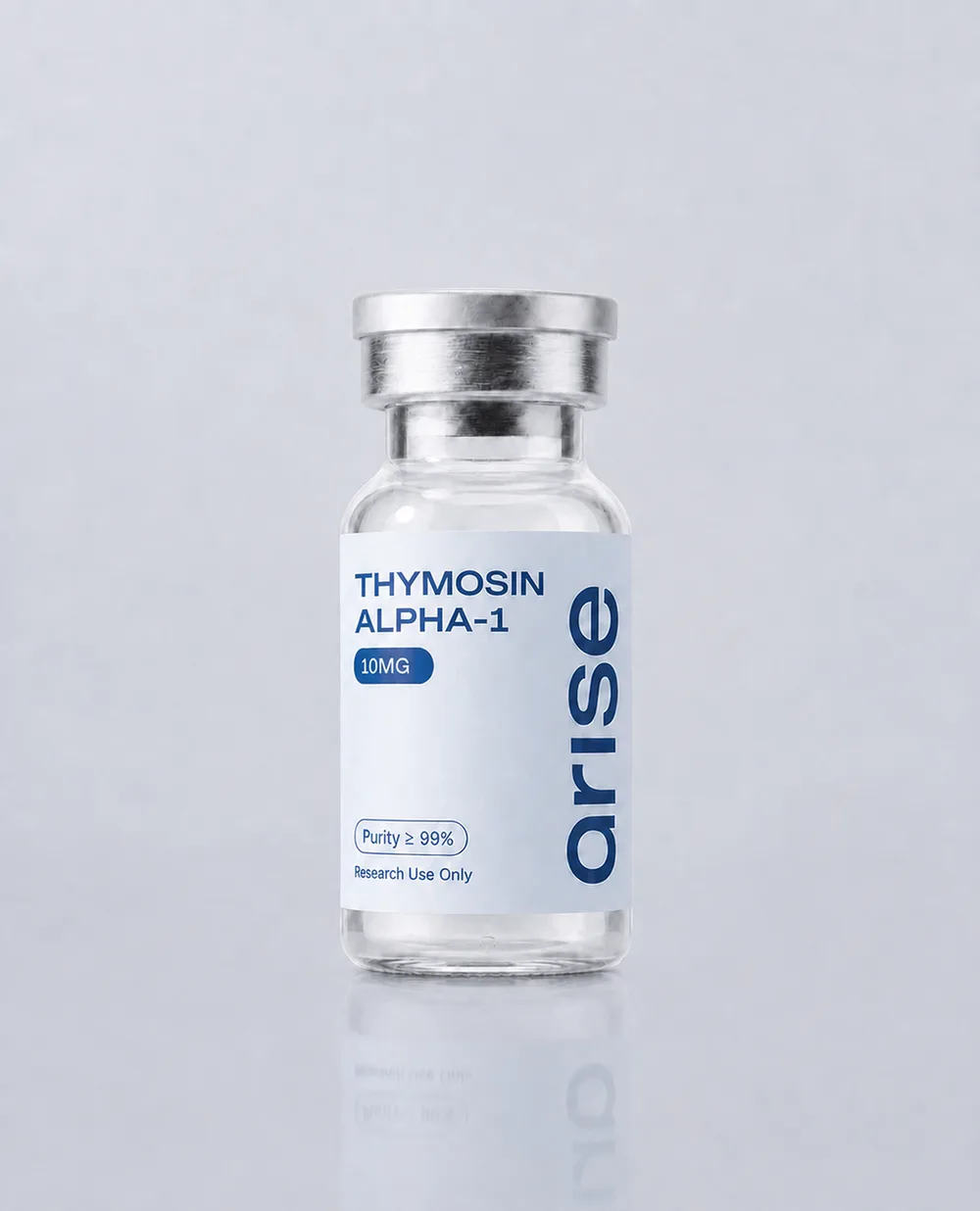
Thymosin Alpha-1
10MGThymosin alpha-1, 28 residues.
6 peer-reviewed citations for this compound
Read the sourcesVolume tiers count vials of this compound at this strength. Mixing different compounds does not combine toward a tier.
- ≥99% purity specification
- Secure checkout
- Ships in 1 business day
- Research use only
Released against a ≥99% HPLC purity specification and supplied as a sealed laboratory reagent for in vitro research use only.
- Type
- Thymosin alpha-1
- CAS number
- 62304-98-7
- Molecular formula
- C129H215N33O55
- Molecular weight
- 3108.3 g/mol
- Amino acids
- 28
- Form
- Lyophilized powder
- Vial strength
- 10MG
- Purity specification
- ≥99% by HPLC
Identifiers are published properties of the molecule. Values we cannot confirm are omitted rather than estimated.
Dispatch
Ships within 1 business day of order confirmation, from the US. Vials ship lyophilized at ambient temperature; move them to the storage condition below on arrival.
Lyophilized
Store at -20°C, protected from light. Stable 24+ months sealed.
Reconstituted
Store at 2-8°C. Use within approximately 30 days.
How Thymosin Alpha-1 is described to act.
Thymosin alpha 1 is a heat-stable, highly acidic 28-residue polypeptide isolated and sequenced from calf thymus fraction 5. In murine models its principal described action is on dendritic cells: it induces functional maturation and interleukin-12 production by fungus-pulsed cells through a p38 MAPK/NF-kappaB-dependent pathway signalled via myeloid differentiation factor 88 and distinct Toll-like receptors, and via TLR9 it activates plasmacytoid dendritic cells and IRF7-dependent type I interferon responses. The same TLR9 route, together with type I interferon receptor signalling, induces indoleamine 2,3-dioxygenase and tryptophan catabolism, yielding interleukin-10 production and generation of regulatory T cells. In these rodent systems the peptide is therefore described as acting on the inflammation/tolerance balance rather than as a unidirectional immunostimulant.
Mechanistic descriptions summarize published in vitro and animal work. They are not a representation of efficacy or safety in any subject, and no administration guidance is given or implied.
In mice, thymosin alpha 1 primed dendritic cells for Th1 antifungal resistance, accelerated myeloid cell recovery and protected highly susceptible hematopoietic transplant recipients from aspergillosis; in a separate model it protected both susceptible and resistant strains from murine cytomegalovirus through TLR9/MyD88/IRF7-dependent viral sensing. The IDO-dependent arm produced interleukin-10 and regulatory T cells and conferred tolerance to alloantigens in transfer experiments, indicating opposing immunological outputs from the same peptide depending on the dendritic cell subset involved. Two randomized human trials in sepsis have been run: a multicenter single-blind randomized controlled trial in severe sepsis with 28-day all-cause mortality as its primary outcome, and a subsequent multicentre double-blinded, placebo-controlled phase 3 trial (TESTS) enrolling 1106 adults at 22 centres with the same primary outcome. The phase 3 trial reported 28-day all-cause mortality of 23.4% with thymosin alpha 1 versus 24.1% with placebo (hazard ratio 0.99, 95% CI 0.77 to 1.27; P=0.93), no statistically significant difference in any secondary or safety outcome, and concluded there was no clear evidence that the drug decreases 28-day all-cause mortality in sepsis. Its prespecified subgroup analysis showed a signal in the opposite direction among participants under 60 years of age (hazard ratio 1.67, 95% CI 1.04 to 2.67; P for interaction=0.01).
Sources & references
Cited literature is provided for scientific reference only and does not constitute a representation of efficacy or safety in any subject. All research findings presented are sourced from peer-reviewed journals and are provided for educational reference only.
- 01
- 02
- 03
- 04
- 05
- 06Thymosin alpha1: isolation and sequence analysis of an immunologically active thymic polypeptide
Goldstein AL, et al. · Proc Natl Acad Sci U S A, 1977
Every entry links to its record at the publisher or on PubMed. Titles are reproduced exactly as published.
Further searches
Live database searches for Thymosin Alpha-1, run against the current index and retrieved independently of this site.
Bench handling, not a dosing guide.
Intended use
Supplied exclusively as a research reagent for in vitro and laboratory use by qualified researchers. Not a drug, dietary supplement, cosmetic or medical device, and not for human or veterinary use. No dosing, route or administration guidance is provided for any compound in this catalog.
Personal protection
Handle in a controlled laboratory environment with gloves and eye protection. Avoid generating or inhaling airborne particulate when opening a vial, and do not handle the material outside a designated work area.
Opening and reconstitution
Lyophilized peptides are hygroscopic. Let the sealed vial equilibrate to room temperature before opening so atmospheric moisture does not condense onto the powder. Reconstitute by directing diluent down the vial wall and swirling until dissolved — do not shake, which shears and foams the peptide.
Stability and aliquoting
Store at -20°C, protected from light. Stable 24+ months sealed. Store at 2-8°C. Use within approximately 30 days. Aliquot reconstituted material and minimize repeated freeze-thaw cycles.
Waste disposal
Dispose of unused material, reconstituted solutions and sharps through your institution's chemical and biological waste stream, in accordance with local regulations. Do not dispose of research material in domestic waste or to drain.
Others in wellness research
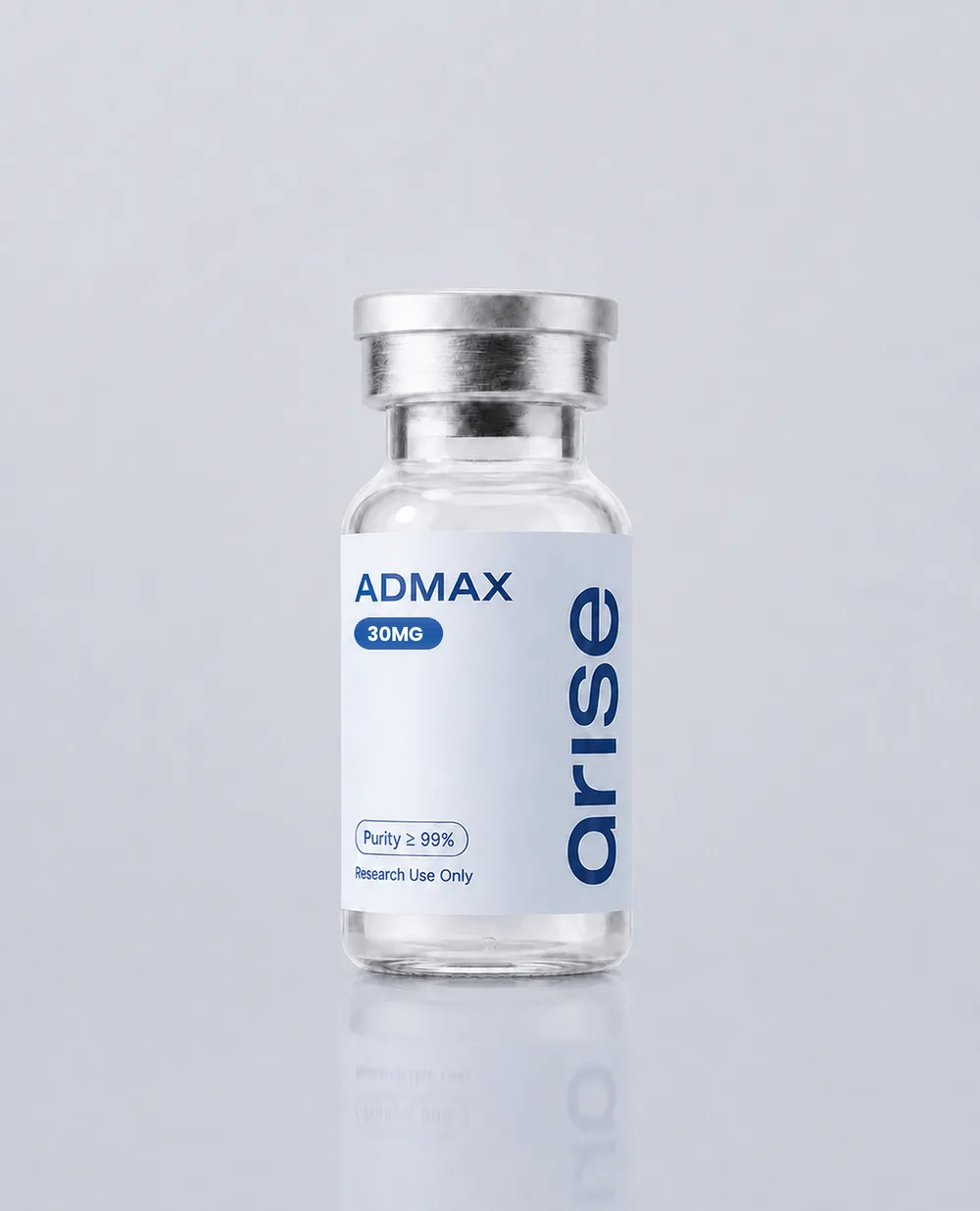
Admax
Research peptide preparation, lyophilized.
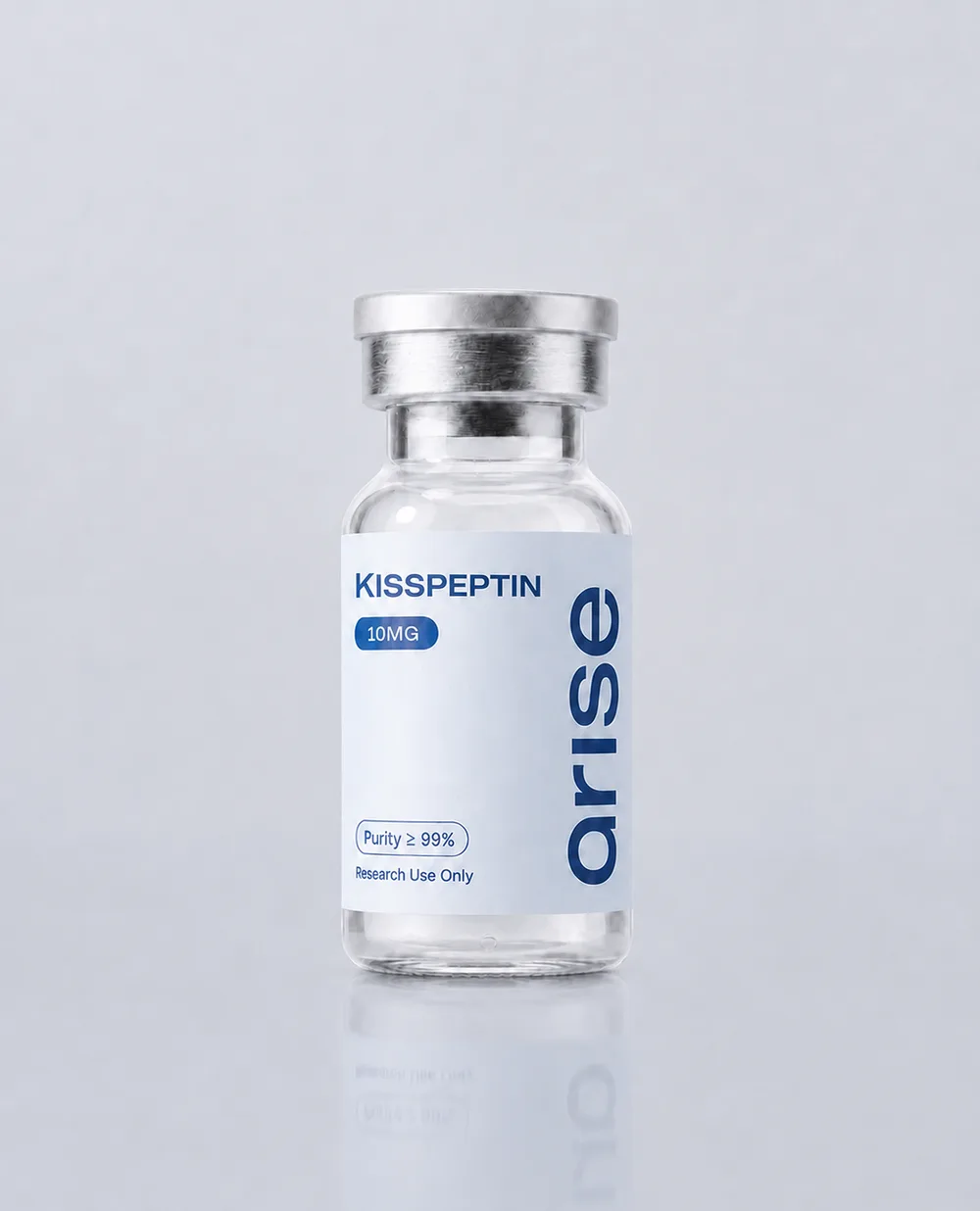
Kisspeptin
Kisspeptin-10 decapeptide.
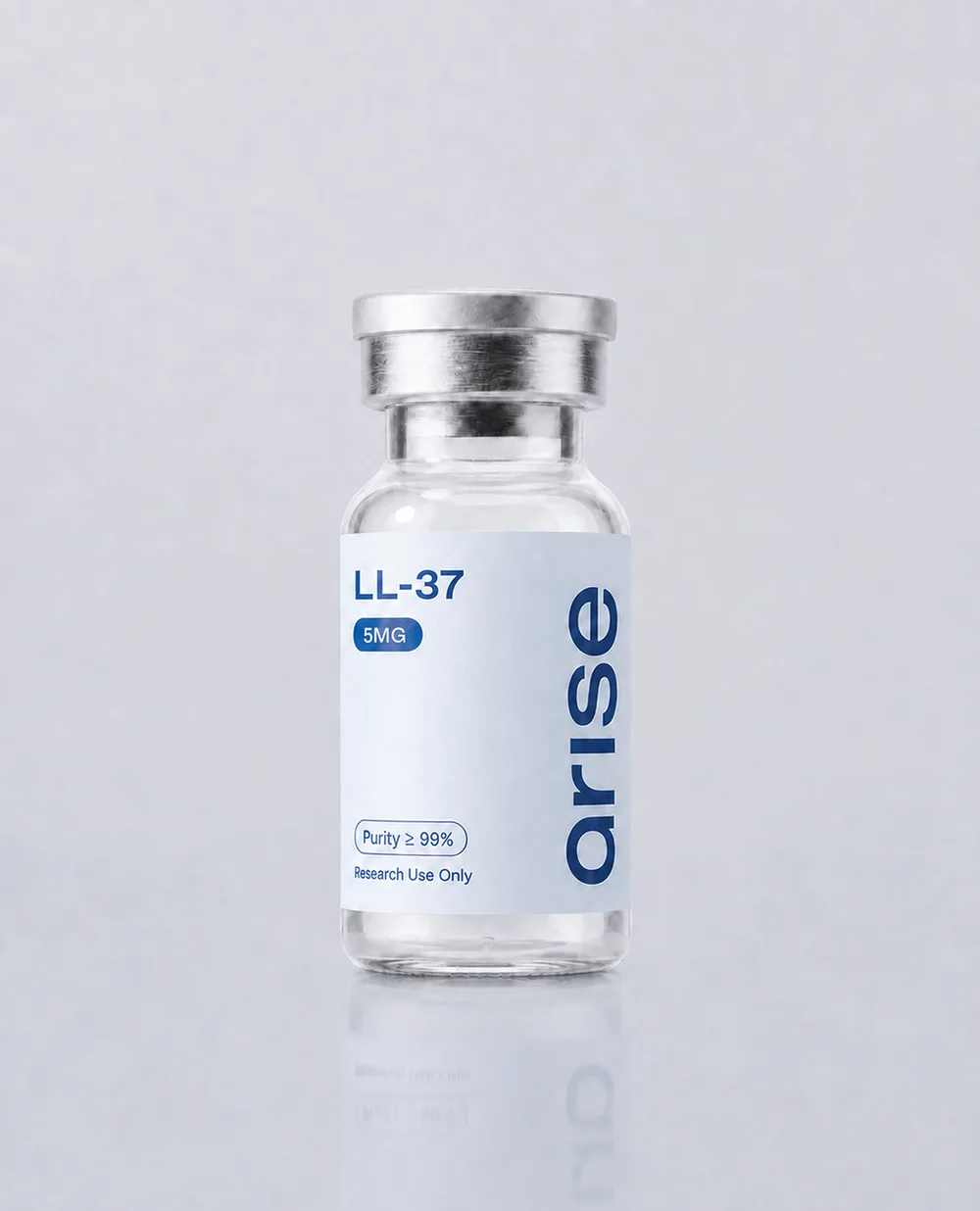
LL-37
37-residue cathelicidin-derived peptide.
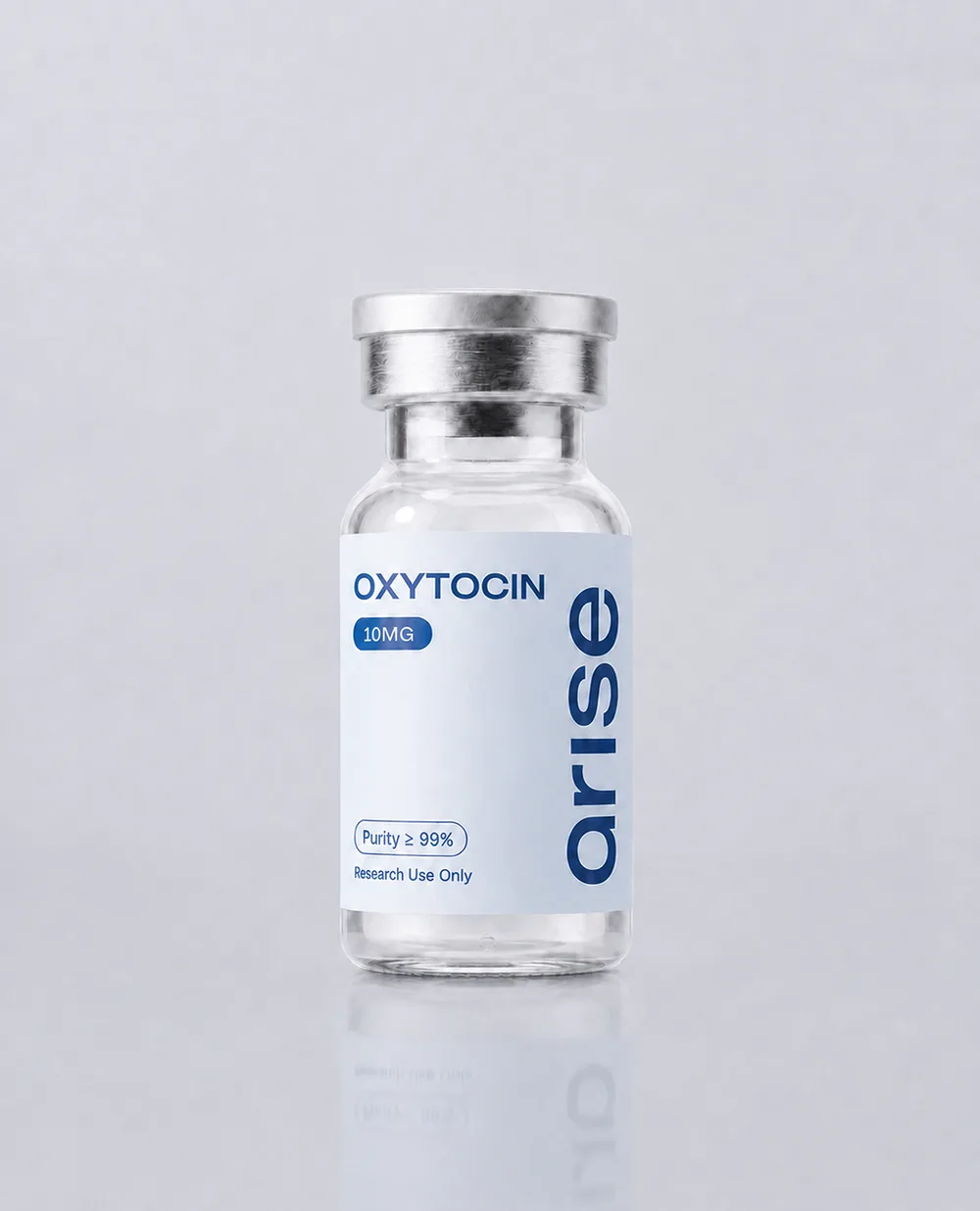
Oxytocin
Cyclic nonapeptide with disulfide bridge.
Important research notice
Not for human consumption. This product is sold exclusively for research and educational purposes. It is not intended to diagnose, treat, cure, or prevent any disease.
This material is supplied exclusively as a research reagent for in vitro and laboratory use by qualified researchers. It is not a drug, dietary supplement, cosmetic, or medical device, is not intended for human or veterinary use, and is not intended to diagnose, treat, cure, or prevent any disease. No dosing, administration, therapeutic, or benefit claims are made or implied. Cited literature is provided for scientific reference only and does not constitute a representation of efficacy or safety in any subject.
By purchasing this product, you confirm that you are a qualified researcher and will use it in accordance with all applicable laws and regulations.