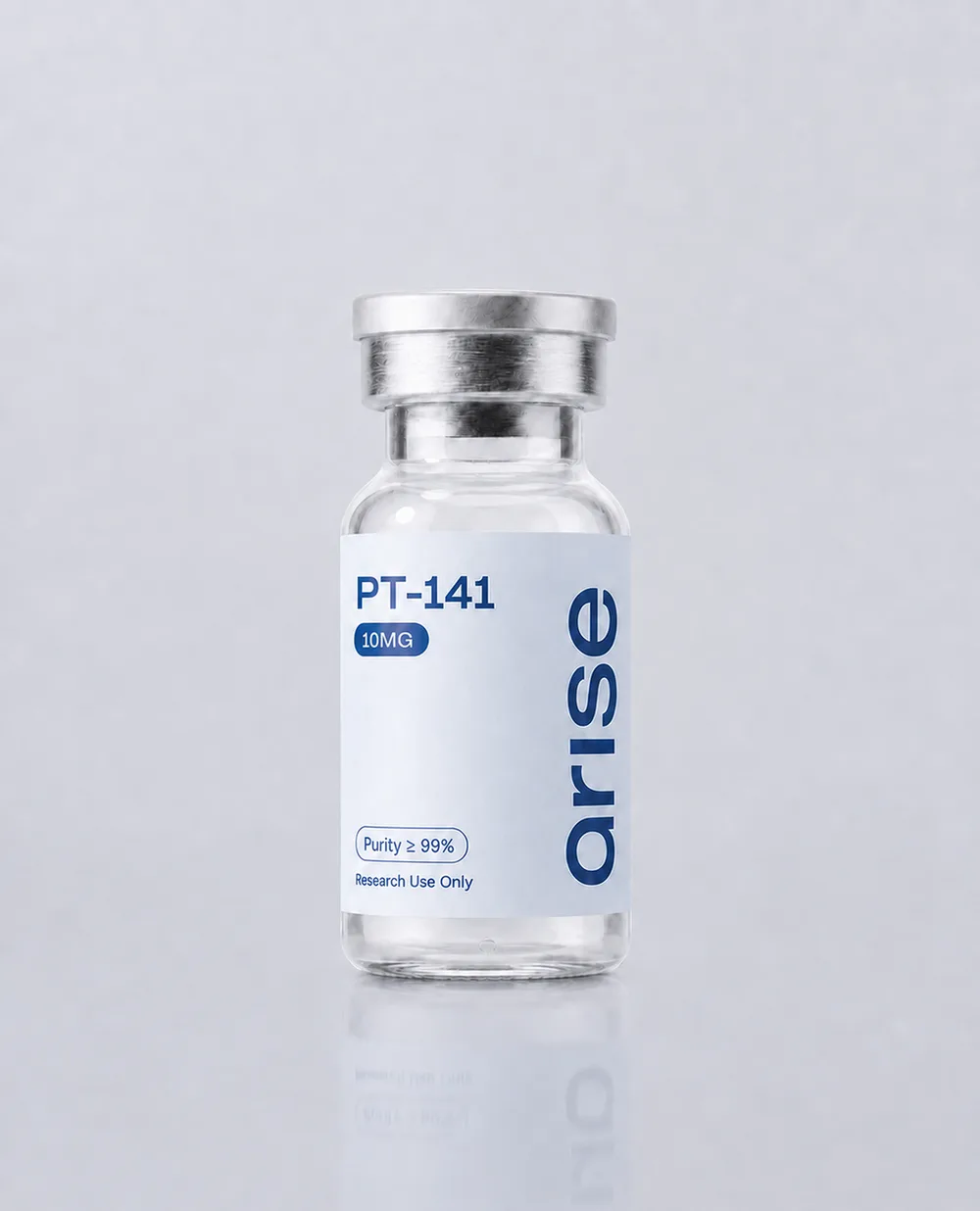
PT-141
10MGBremelanotide, cyclic heptapeptide analog.
12 peer-reviewed citations for this compound
Read the sourcesVolume tiers count vials of this compound at this strength. Mixing different compounds does not combine toward a tier.
- ≥99% purity specification
- Secure checkout
- Ships in 1 business day
- Research use only
Released against a ≥99% HPLC purity specification and supplied as a sealed laboratory reagent for in vitro research use only.
- Type
- Bremelanotide — cyclic heptapeptide melanocortin analog
- CAS number
- 189691-06-3
- Molecular formula
- C50H68N14O10
- Molecular weight
- 1025.16 g/mol
- Amino acids
- 7
- Form
- Lyophilized powder
- Vial strength
- 10MG
- Purity specification
- ≥99% by HPLC
Identifiers are published properties of the molecule. Values we cannot confirm are omitted rather than estimated.
Dispatch
Ships within 1 business day of order confirmation, from the US. Vials ship lyophilized at ambient temperature; move them to the storage condition below on arrival.
Lyophilized
Store at -20°C, protected from light. Stable 24+ months sealed.
Reconstituted
Store at 2-8°C. Use within approximately 30 days.
How PT-141 is described to act.
Bremelanotide (PT-141) is a synthetic peptide melanocortin analogue of alpha-melanocyte-stimulating hormone that acts as an agonist at the MC3 and MC4 receptors. Reviews report that it non-selectively activates several melanocortin receptor subtypes, with MC4R considered the subtype most relevant at the concentrations used in the clinical programme. The proposed site of action is central rather than peripheral: MC4R is predominantly expressed in regions including the medial preoptic area, and melanocortin peptides are described as belonging to the excitatory arm of the sexual response system alongside dopaminergic, noradrenergic and serotonergic inputs. MC4R binding is also the mechanism proposed for the transient blood pressure changes observed in dedicated cardiovascular monitoring studies.
Mechanistic descriptions summarize published in vitro and animal work. They are not a representation of efficacy or safety in any subject, and no administration guidance is given or implied.
Two identical randomised, double-blind, placebo-controlled multicentre phase 3 trials (RECONNECT) in premenopausal women with hypoactive sexual desire disorder randomised 1,267 participants over 24 weeks, with co-primary endpoints of change from baseline to end of study in the Female Sexual Function Index desire domain score and in item 13 of the Female Sexual Distress Scale. An earlier randomised crossover study in 18 premenopausal women with female sexual arousal disorder measured vaginal pulse amplitude by photoplethysmography during neutral and sexually explicit video segments, together with subjective ratings within 24 hours. A randomised, double-blind, placebo-controlled parallel-arm ambulatory blood pressure trial in 397 premenopausal women reported increases in ambulatory systolic and diastolic pressure of a few mmHg relative to placebo, accompanied by heart rate reductions, with peak increases typically lasting less than 15 minutes. A published re-analysis of the phase 3 data reported that most protocol-listed outcomes were not reported in the primary publication, that adverse-event-induced study discontinuation was substantially higher in the bremelanotide arm, and that participants more often both completed the trial and enrolled in open-label follow-up on placebo. A development-milestones review summarises the compound's first regulatory approval, granted in the USA in 2019 for this indication. A measurement-properties analysis of the phase 3 efficacy instruments argues that the Female Sexual Function Index desire domain and the Female Sexual Distress Scale item used as co-primary endpoints carry questionable validity evidence in this population. A drug bulletin analysis compared the outcome measures and trial data underlying the 2015 approval of flibanserin and the 2019 approval of this compound, reporting that the latter produced no additional enjoyable sexual event on average and that both programmes featured shifts in primary outcomes. A systematic review of completed studies registered on ClinicalTrials.gov catalogues efficacy endpoints and safety reporting across the pharmacological options for this indication. Mechanistic work outside the trial literature includes a review of the central melanocortin system across metabolic indications and a female Syrian hamster study examining melanocortin receptor expression in the mesolimbic dopamine system. Forensic characterisation by high-resolution mass spectrometry of eight samples confiscated by police documents the compound circulating on the black market for performance and image enhancing drugs alongside melanotan II, anabolic steroids and hormone modulators.
Sources & references
Cited literature is provided for scientific reference only and does not constitute a representation of efficacy or safety in any subject. All research findings presented are sourced from peer-reviewed journals and are provided for educational reference only.
- 01
- 02
- 03Small Effects, Questionable Outcomes: Bremelanotide for Hypoactive Sexual Desire Disorder
Spielmans GI, et al. · J Sex Res, 2024
- 04Targeting the central melanocortin system for the treatment of metabolic disorders
Sweeney P, et al. · Nat Rev Endocrinol, 2023
- 05
- 06
- 07Bremelanotide and flibanserin for low sexual desire in women: the fallacy of regulatory precedent
Mintzes B, et al. · Drug Ther Bull, 2021
- 08
- 09Bremelanotide: First Approval
Dhillon S, et al. · Drugs, 2019
- 10Bremelanotide for the Treatment of Hypoactive Sexual Desire Disorder: Two Randomized Phase 3 Trials
Kingsberg SA, et al. · Obstet Gynecol, 2019
- 11
- 12
Every entry links to its record at the publisher or on PubMed. Titles are reproduced exactly as published.
Further searches
Live database searches for PT-141, run against the current index and retrieved independently of this site.
Bench handling, not a dosing guide.
Intended use
Supplied exclusively as a research reagent for in vitro and laboratory use by qualified researchers. Not a drug, dietary supplement, cosmetic or medical device, and not for human or veterinary use. No dosing, route or administration guidance is provided for any compound in this catalog.
Personal protection
Handle in a controlled laboratory environment with gloves and eye protection. Avoid generating or inhaling airborne particulate when opening a vial, and do not handle the material outside a designated work area.
Opening and reconstitution
Lyophilized peptides are hygroscopic. Let the sealed vial equilibrate to room temperature before opening so atmospheric moisture does not condense onto the powder. Reconstitute by directing diluent down the vial wall and swirling until dissolved — do not shake, which shears and foams the peptide.
Stability and aliquoting
Store at -20°C, protected from light. Stable 24+ months sealed. Store at 2-8°C. Use within approximately 30 days. Aliquot reconstituted material and minimize repeated freeze-thaw cycles.
Waste disposal
Dispose of unused material, reconstituted solutions and sharps through your institution's chemical and biological waste stream, in accordance with local regulations. Do not dispose of research material in domestic waste or to drain.
Others in wellness research
Admax
Research peptide preparation, lyophilized.
Kisspeptin
Kisspeptin-10 decapeptide.
LL-37
37-residue cathelicidin-derived peptide.
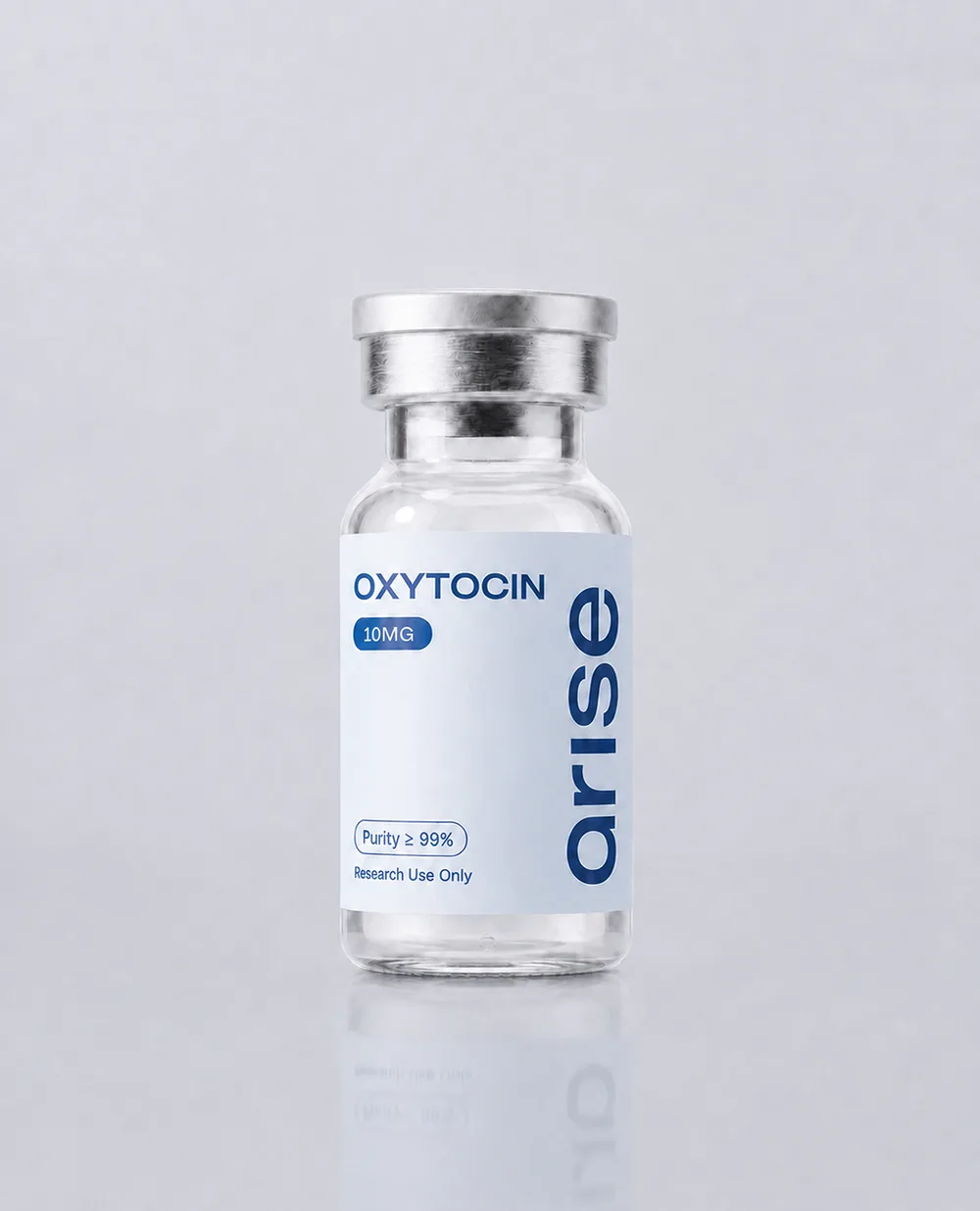
Oxytocin
Cyclic nonapeptide with disulfide bridge.
Important research notice
Not for human consumption. This product is sold exclusively for research and educational purposes. It is not intended to diagnose, treat, cure, or prevent any disease.
This material is supplied exclusively as a research reagent for in vitro and laboratory use by qualified researchers. It is not a drug, dietary supplement, cosmetic, or medical device, is not intended for human or veterinary use, and is not intended to diagnose, treat, cure, or prevent any disease. No dosing, administration, therapeutic, or benefit claims are made or implied. Cited literature is provided for scientific reference only and does not constitute a representation of efficacy or safety in any subject.
By purchasing this product, you confirm that you are a qualified researcher and will use it in accordance with all applicable laws and regulations.