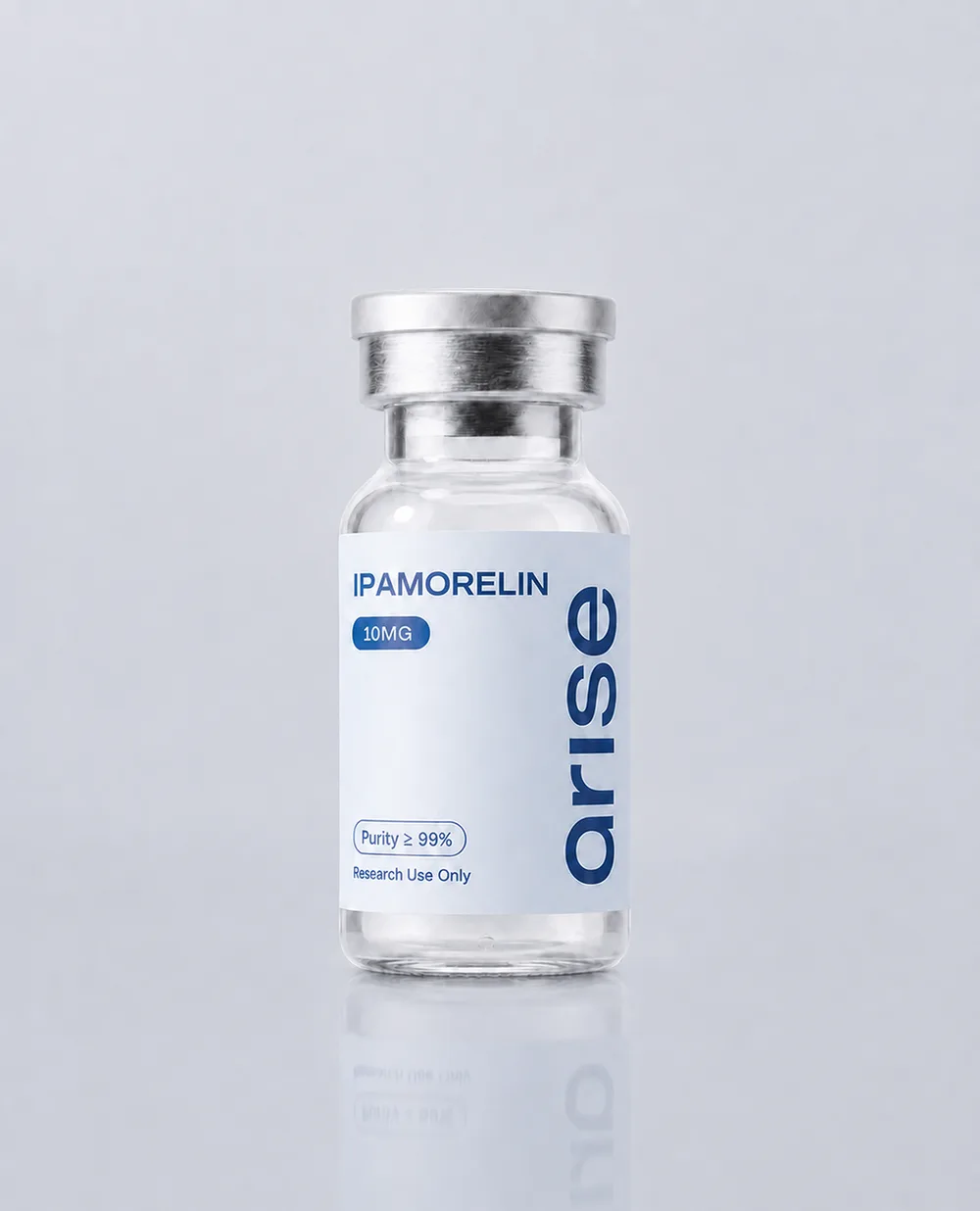
Ipamorelin
10MGSelective pentapeptide growth-hormone secretagogue.
12 peer-reviewed citations for this compound
Read the sourcesVolume tiers count vials of this compound at this strength. Mixing different compounds does not combine toward a tier.
- ≥99% purity specification
- Secure checkout
- Ships in 1 business day
- Research use only
Released against a ≥99% HPLC purity specification and supplied as a sealed laboratory reagent for in vitro research use only.
- Type
- Selective pentapeptide growth-hormone secretagogue
- CAS number
- 170851-70-4
- Molecular formula
- C38H49N9O5
- Molecular weight
- 711.85 g/mol
- Amino acids
- 5
- Form
- Lyophilized powder
- Vial strength
- 10MG
- Purity specification
- ≥99% by HPLC
Identifiers are published properties of the molecule. Values we cannot confirm are omitted rather than estimated.
Dispatch
Ships within 1 business day of order confirmation, from the US. Vials ship lyophilized at ambient temperature; move them to the storage condition below on arrival.
Lyophilized
Store at -20°C, protected from light. Stable 24+ months sealed.
Reconstituted
Store at 2-8°C. Use within approximately 30 days.
How Ipamorelin is described to act.
Ipamorelin is a synthetic pentapeptide (Aib-His-D-2-Nal-D-Phe-Lys-NH2) identified within a compound series lacking the central Ala-Trp dipeptide of growth hormone-releasing peptide-1. Pharmacological profiling in primary rat pituitary cells using GHRP and GHRH antagonists indicates that it stimulates growth hormone release through a GHRP-like receptor, later characterized as the growth hormone secretagogue receptor 1a (the ghrelin receptor), rather than through the GHRH receptor. In vitro potency and efficacy in rat pituitary cells were reported as similar to GHRP-6, and in conscious swine the compound was described as selective for GH release relative to other pituitary hormones. Ghrelin-receptor agonism also underlies the prokinetic gastrointestinal activity examined in rodent work.
Mechanistic descriptions summarize published in vitro and animal work. They are not a representation of efficacy or safety in any subject, and no administration guidance is given or implied.
In adult female rats, subcutaneous ipamorelin dose-dependently increased longitudinal bone growth rate measured by intravital tetracycline labelling in the proximal tibia metaphysis and increased body weight gain, without altering total IGF-I, IGFBPs, or serum markers of bone formation and resorption. In a three-month adult rat model of glucocorticoid administration, co-treatment increased periosteal bone formation rate approximately fourfold and increased maximum tetanic tension of the calf muscles relative to glucocorticoid alone. In a rodent model of postoperative ileus, repeated intravenous dosing shortened time to first bowel movement and increased cumulative fecal pellet output, food intake, and body weight gain. Pharmacokinetic-pharmacodynamic modeling was performed in human volunteers. A phase 2 prospective, randomized, double-blind, placebo-controlled trial in 114 patients undergoing bowel resection examined time from first dose to tolerance of a standardized solid meal as its key efficacy endpoint, with adverse events and laboratory tests as safety measures. In growth-hormone-deficient (lit/lit) and GH-intact mice, twice-daily treatment produced an approximately 15% increase in body weight by two weeks that was not further augmented by nine weeks, and increased fat pad weights relative to body weight in both genotypes, which the authors read as stimulation of adiposity independent of growth hormone. In 13-week-old female Sprague-Dawley rats, bone mineral content was compared against GH-releasing peptide-6. In ferrets, the compound and anamorelin were examined against cisplatin-induced weight loss and reduced feeding, with anti-emetic activity separating the two agents. Two reviews address the distance between this record and use outside clinical settings: one catalogues peptides modulating the GH-IGF-1 axis that are marketed as research compounds and self-administered under online protocols, and a critical review of peptide use in recreational and professional sport lists the compound among growth hormone secretagogues promoted for muscle growth and recovery. Analytical work on preparations seized by Danish customs identified glycine-modified analogues of the compound alongside GHRP-2, GHRP-6 and modified GRF 1-29, indicating that material circulating under this name is not always the compound characterised in the literature.
Sources & references
Cited literature is provided for scientific reference only and does not constitute a representation of efficacy or safety in any subject. All research findings presented are sourced from peer-reviewed journals and are provided for educational reference only.
- 01The emerging landscape of performance-enhancing peptides modulating GH-IGF1 axis: bridging the gap between clinical evidence and patient self-administration
Dominikowski A, et al. · Front Endocrinol (Lausanne), 2026
- 02A new era of doping? Use of peptide and peptide-analog drugs in recreational and professional sport and bodybuilding: a critical review
Coutinho LFD, et al. · J Sports Med Phys Fitness, 2026
- 03
- 04Glycine-modified growth hormone secretagogues identified in seized doping material
Gajda PM, et al. · Drug Test Anal, 2019
- 05
- 06Efficacy of ipamorelin, a novel ghrelin mimetic, in a rodent model of postoperative ileus
Venkova K, et al. · J Pharmacol Exp Ther, 2009
- 07The growth hormone secretagogue ipamorelin counteracts glucocorticoid-induced decrease in bone formation of adult rats
Andersen NB, et al. · Growth Horm IGF Res, 2001
- 08Growth hormone (GH)-independent stimulation of adiposity by GH secretagogues
Lall S, et al. · Biochem Biophys Res Commun, 2001
- 09The GH secretagogues ipamorelin and GH-releasing peptide-6 increase bone mineral content in adult female rats
Svensson J, et al. · J Endocrinol, 2000
- 10Ipamorelin, a new growth-hormone-releasing peptide, induces longitudinal bone growth in rats
Johansen PB, et al. · Growth Horm IGF Res, 1999
- 11
- 12Ipamorelin, the first selective growth hormone secretagogue
Raun K, et al. · Eur J Endocrinol, 1998
Every entry links to its record at the publisher or on PubMed. Titles are reproduced exactly as published.
Further searches
Live database searches for Ipamorelin, run against the current index and retrieved independently of this site.
Bench handling, not a dosing guide.
Intended use
Supplied exclusively as a research reagent for in vitro and laboratory use by qualified researchers. Not a drug, dietary supplement, cosmetic or medical device, and not for human or veterinary use. No dosing, route or administration guidance is provided for any compound in this catalog.
Personal protection
Handle in a controlled laboratory environment with gloves and eye protection. Avoid generating or inhaling airborne particulate when opening a vial, and do not handle the material outside a designated work area.
Opening and reconstitution
Lyophilized peptides are hygroscopic. Let the sealed vial equilibrate to room temperature before opening so atmospheric moisture does not condense onto the powder. Reconstitute by directing diluent down the vial wall and swirling until dissolved — do not shake, which shears and foams the peptide.
Stability and aliquoting
Store at -20°C, protected from light. Stable 24+ months sealed. Store at 2-8°C. Use within approximately 30 days. Aliquot reconstituted material and minimize repeated freeze-thaw cycles.
Waste disposal
Dispose of unused material, reconstituted solutions and sharps through your institution's chemical and biological waste stream, in accordance with local regulations. Do not dispose of research material in domestic waste or to drain.
Others in secretagogue research
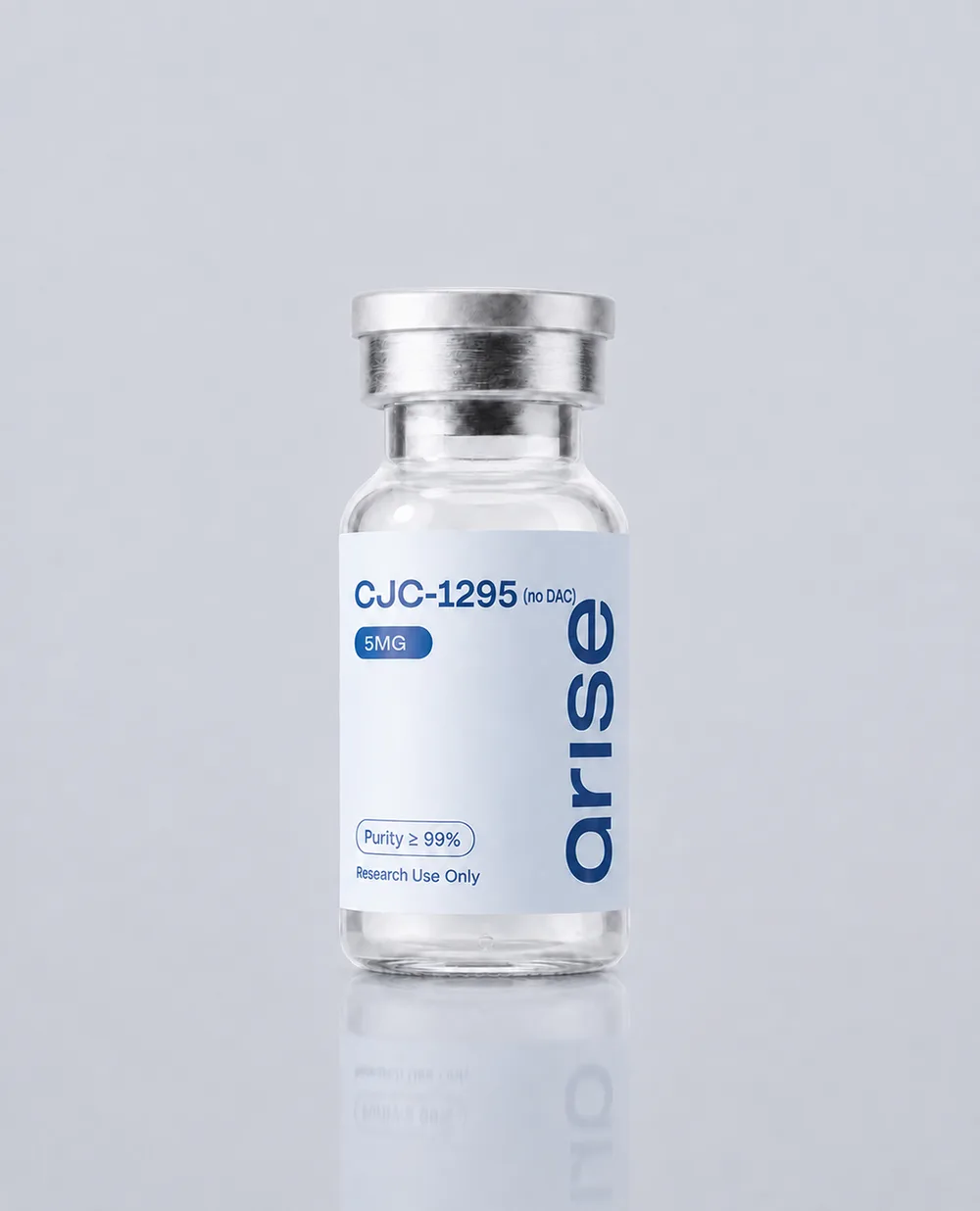
CJC-1295 (no DAC)
Modified GRF (1-29) secretagogue analog.
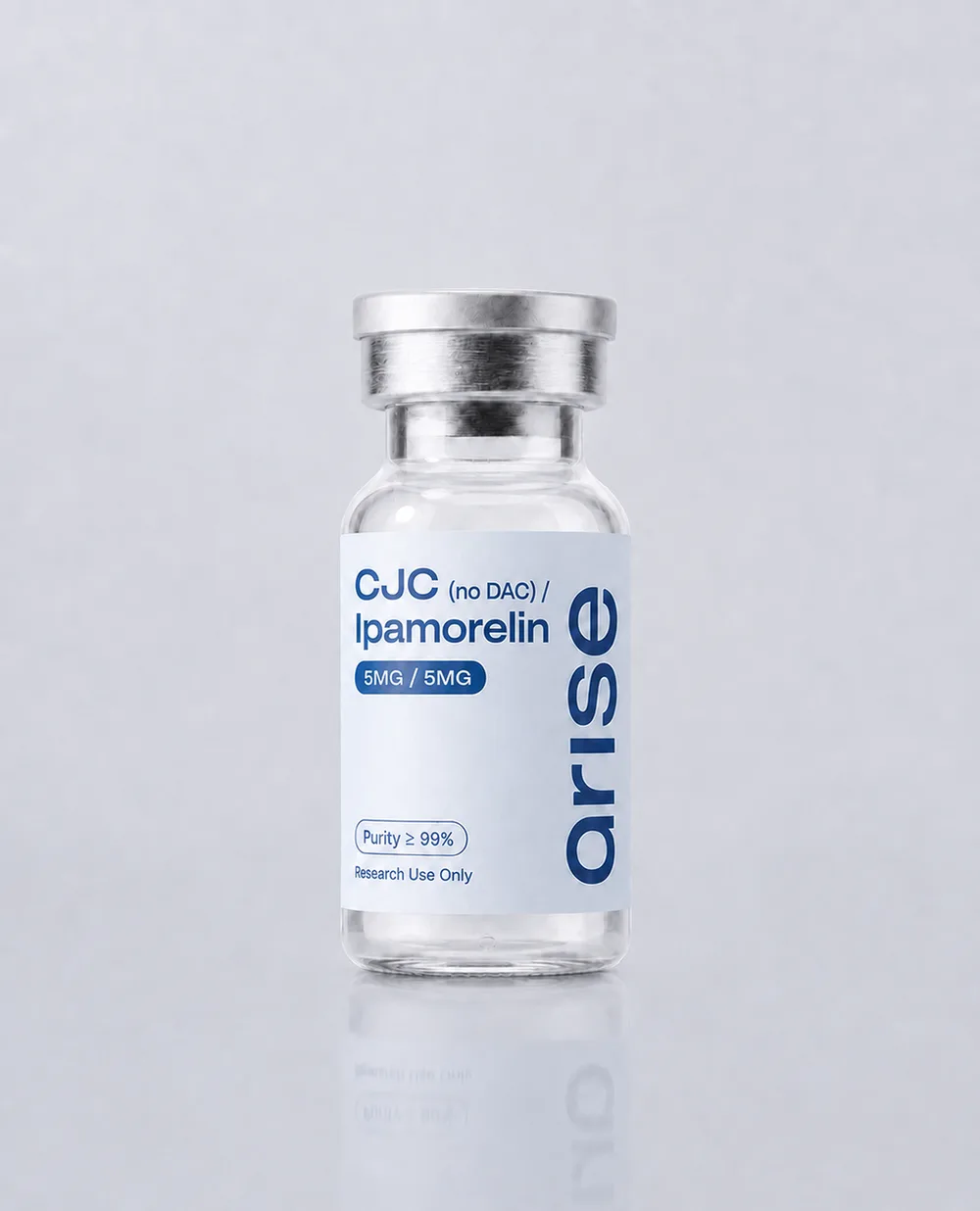
CJC (no DAC) / Ipamorelin
Mod GRF (1-29) and ipamorelin blend.
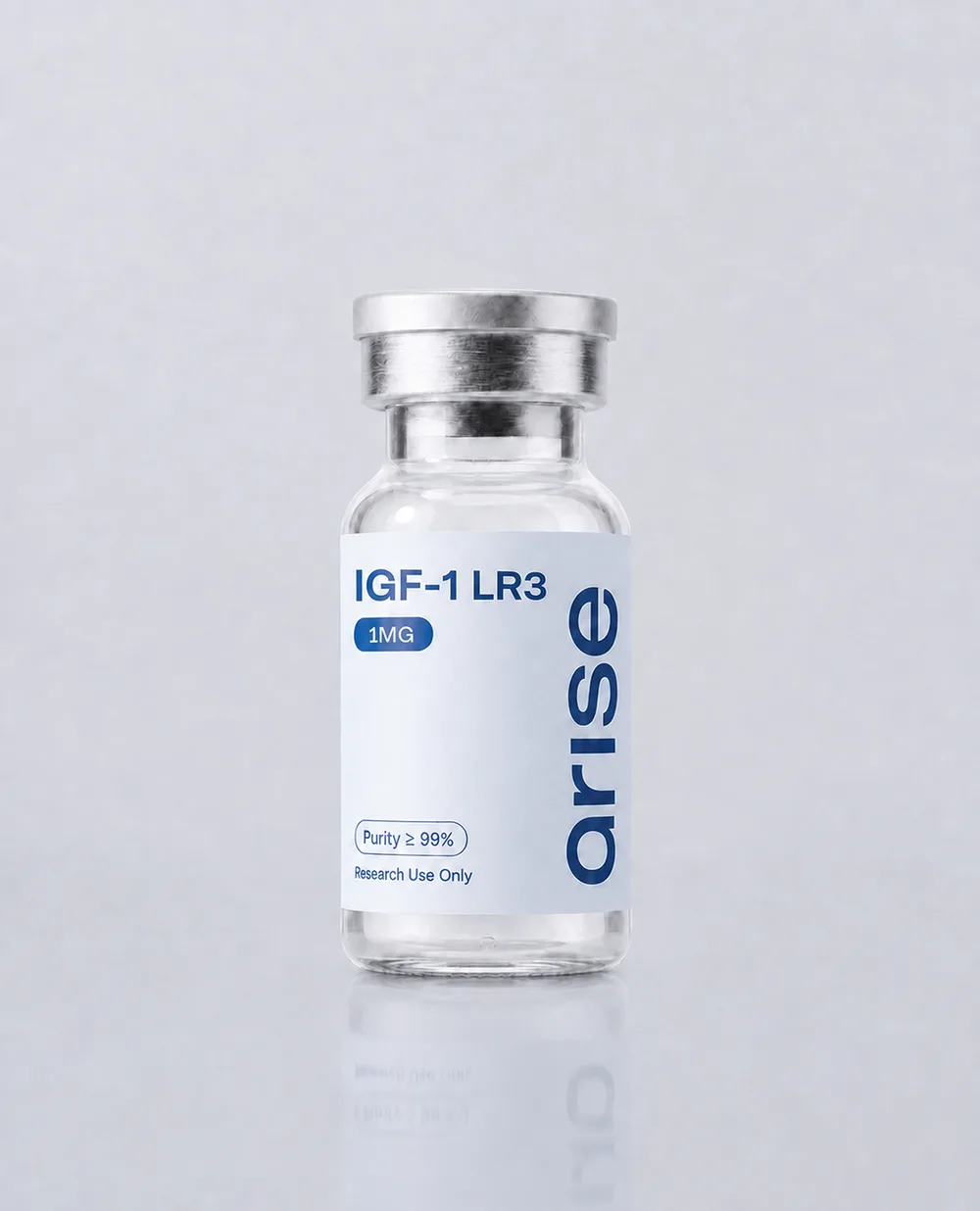
IGF-1 LR3
83-residue recombinant IGF-1 analog.
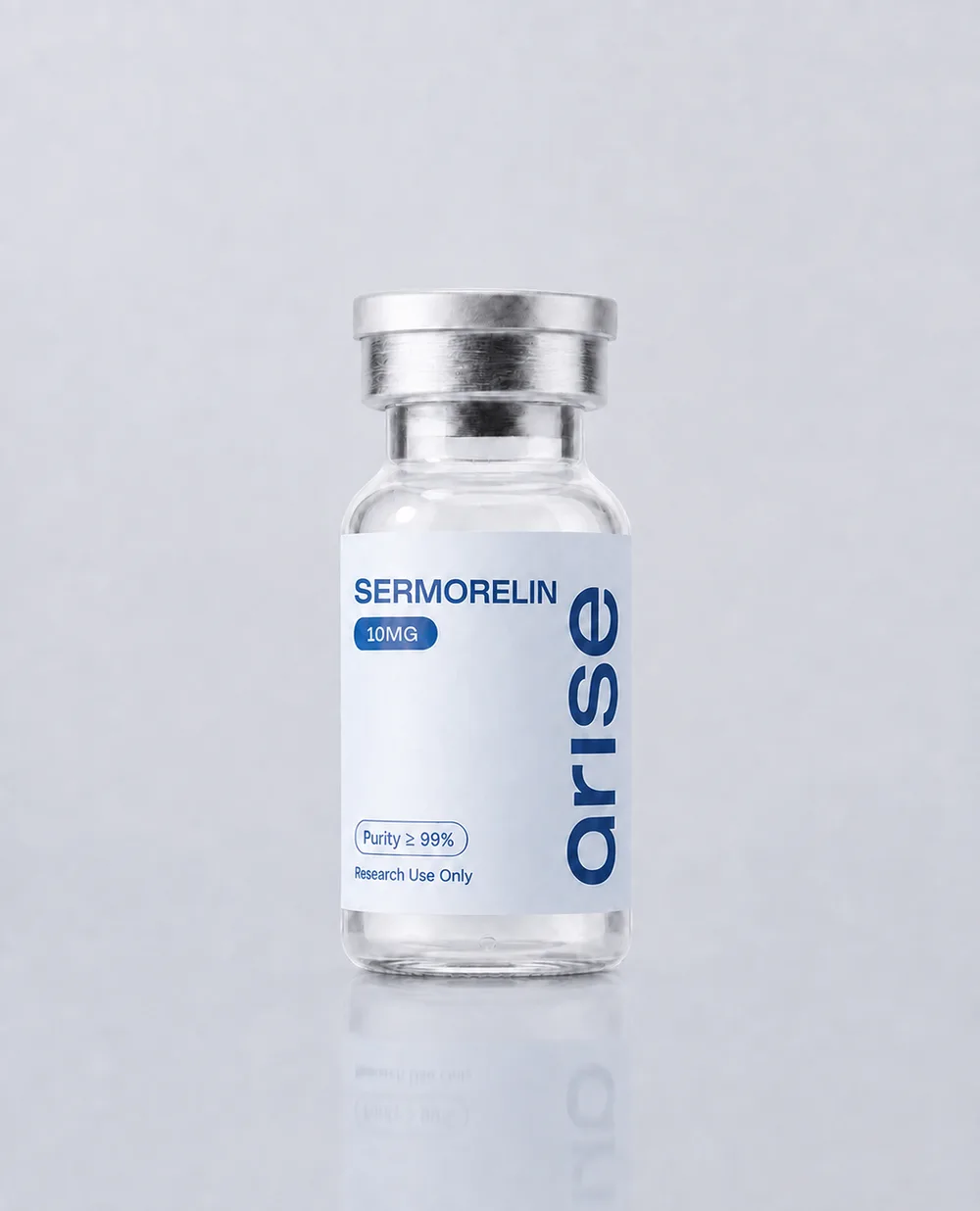
Sermorelin
GHRH (1-29) amide, 29 residues.
Important research notice
Not for human consumption. This product is sold exclusively for research and educational purposes. It is not intended to diagnose, treat, cure, or prevent any disease.
This material is supplied exclusively as a research reagent for in vitro and laboratory use by qualified researchers. It is not a drug, dietary supplement, cosmetic, or medical device, is not intended for human or veterinary use, and is not intended to diagnose, treat, cure, or prevent any disease. No dosing, administration, therapeutic, or benefit claims are made or implied. Cited literature is provided for scientific reference only and does not constitute a representation of efficacy or safety in any subject.
By purchasing this product, you confirm that you are a qualified researcher and will use it in accordance with all applicable laws and regulations.