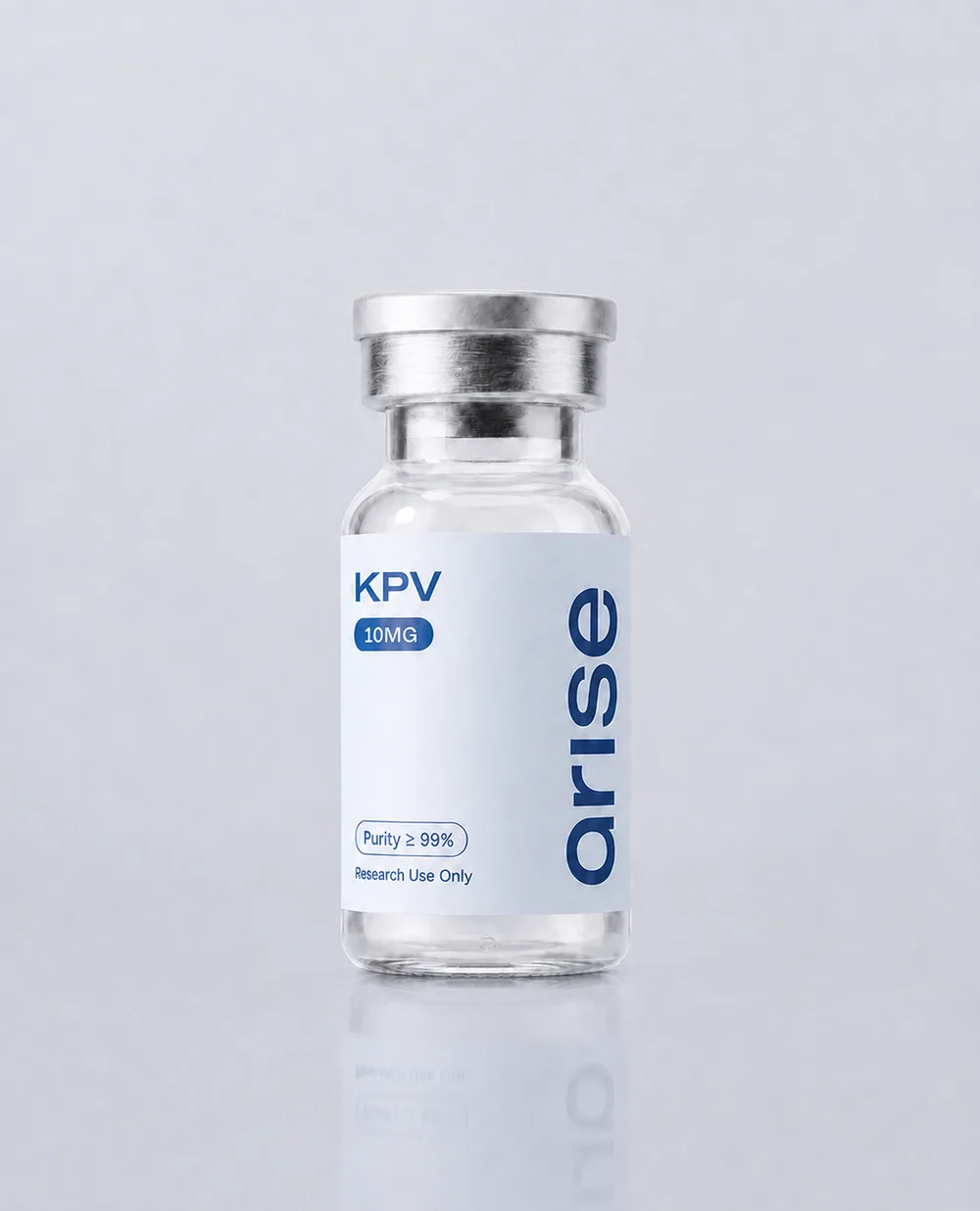
KPV
10MGC-terminal alpha-MSH tripeptide.
6 peer-reviewed citations for this compound
Read the sourcesVolume tiers count vials of this compound at this strength. Mixing different compounds does not combine toward a tier.
- ≥99% purity specification
- Secure checkout
- Ships in 1 business day
- Research use only
Released against a ≥99% HPLC purity specification and supplied as a sealed laboratory reagent for in vitro research use only.
- Type
- C-terminal alpha-MSH tripeptide
- CAS number
- 63968-82-1
- Molecular formula
- C16H27N5O4
- Molecular weight
- 353.42 g/mol
- Amino acids
- 3
- Sequence
- Lys-Pro-Val
- Form
- Lyophilized powder
- Vial strength
- 10MG
- Purity specification
- ≥99% by HPLC
Identifiers are published properties of the molecule. Values we cannot confirm are omitted rather than estimated.
Dispatch
Ships within 1 business day of order confirmation, from the US. Vials ship lyophilized at ambient temperature; move them to the storage condition below on arrival.
Lyophilized
Store at -20°C, protected from light. Stable 24+ months sealed.
Reconstituted
Store at 2-8°C. Use within approximately 30 days.
How KPV is described to act.
KPV is the carboxy-terminal tripeptide (Lys-Pro-Val) of alpha-melanocyte-stimulating hormone, itself a proopiomelanocortin-derived peptide. In cultured human intestinal epithelial and T cell lines and in rodent colitis models, KPV is taken up by the di/tripeptide transporter PepT1, which is expressed in small intestine and upregulated in inflamed colonic epithelium, and the internalized peptide suppresses NF-kappaB reporter activity and pro-inflammatory cytokine output. The wider melanocortin literature attributes the anti-inflammatory activity of alpha-MSH-related peptides to melanocortin receptor engagement, with downstream effects on NF-kappaB activation, adhesion molecule and chemokine receptor expression, IL-10 synthesis and inflammatory cell migration. The receptor route for the tripeptide itself is unsettled: in human keratinocytes KPV evoked intracellular calcium transients with no detectable elevation of cyclic AMP.
Mechanistic descriptions summarize published in vitro and animal work. They are not a representation of efficacy or safety in any subject, and no administration guidance is given or implied.
In vitro, KPV reduced NF-kappaB reporter activity and cytokine secretion in cytokine-stimulated Caco2-BBE, HT29-Cl.19A and Jurkat cells, and KPV supplied in drinking water attenuated DSS- and TNBS-induced colitis in mice. alpha-MSH and its 11-13 tripeptide also inhibited Staphylococcus aureus colony formation and reduced viability and germ tube formation of Candida albicans in vitro across a broad concentration range. In an AOM/DSS mouse model, intestinal overexpression of human PepT1 increased tumour size and burden while PepT1 deletion decreased them, so the transporter that carries KPV is itself implicated in promoting colitis-associated cancer, a caution that sits alongside the KPV effect reported in the same study. Hyaluronic-acid-functionalized nanoparticles delivering KPV to colonic epithelial cells and macrophages reduced mucosal damage and downregulated TNF-alpha in murine ulcerative colitis. A signalling study in HaCaT and normal human keratinocytes detected no cyclic AMP elevation in response to alpha-MSH, KPV, KP-D-V or ACTH peptides, which conflicts with the cAMP-dependent mechanism assumed elsewhere in this literature; the citations here are preclinical and in vitro, and no controlled human trial of KPV is represented among them.
Sources & references
Cited literature is provided for scientific reference only and does not constitute a representation of efficacy or safety in any subject. All research findings presented are sourced from peer-reviewed journals and are provided for educational reference only.
- 01
- 02Critical role of PepT1 in promoting colitis-associated cancer and therapeutic benefits of the anti-inflammatory PepT1-mediated tripeptide KPV in a murine model
Viennois E, et al. · Cell Mol Gastroenterol Hepatol, 2016
- 03
- 04PepT1-mediated tripeptide KPV uptake reduces intestinal inflammation
Dalmasso G, et al. · Gastroenterology, 2008
- 05alpha-Melanocyte-stimulating hormone, MSH 11-13 KPV and adrenocorticotropic hormone signalling in human keratinocyte cells
Elliott RJ, et al. · J Invest Dermatol, 2004
- 06Antimicrobial effects of alpha-MSH peptides
Cutuli M, et al. · J Leukoc Biol, 2000
Every entry links to its record at the publisher or on PubMed. Titles are reproduced exactly as published.
Further searches
Live database searches for KPV, run against the current index and retrieved independently of this site.
Bench handling, not a dosing guide.
Intended use
Supplied exclusively as a research reagent for in vitro and laboratory use by qualified researchers. Not a drug, dietary supplement, cosmetic or medical device, and not for human or veterinary use. No dosing, route or administration guidance is provided for any compound in this catalog.
Personal protection
Handle in a controlled laboratory environment with gloves and eye protection. Avoid generating or inhaling airborne particulate when opening a vial, and do not handle the material outside a designated work area.
Opening and reconstitution
Lyophilized peptides are hygroscopic. Let the sealed vial equilibrate to room temperature before opening so atmospheric moisture does not condense onto the powder. Reconstitute by directing diluent down the vial wall and swirling until dissolved — do not shake, which shears and foams the peptide.
Stability and aliquoting
Store at -20°C, protected from light. Stable 24+ months sealed. Store at 2-8°C. Use within approximately 30 days. Aliquot reconstituted material and minimize repeated freeze-thaw cycles.
Waste disposal
Dispose of unused material, reconstituted solutions and sharps through your institution's chemical and biological waste stream, in accordance with local regulations. Do not dispose of research material in domestic waste or to drain.
Others in healing & recovery
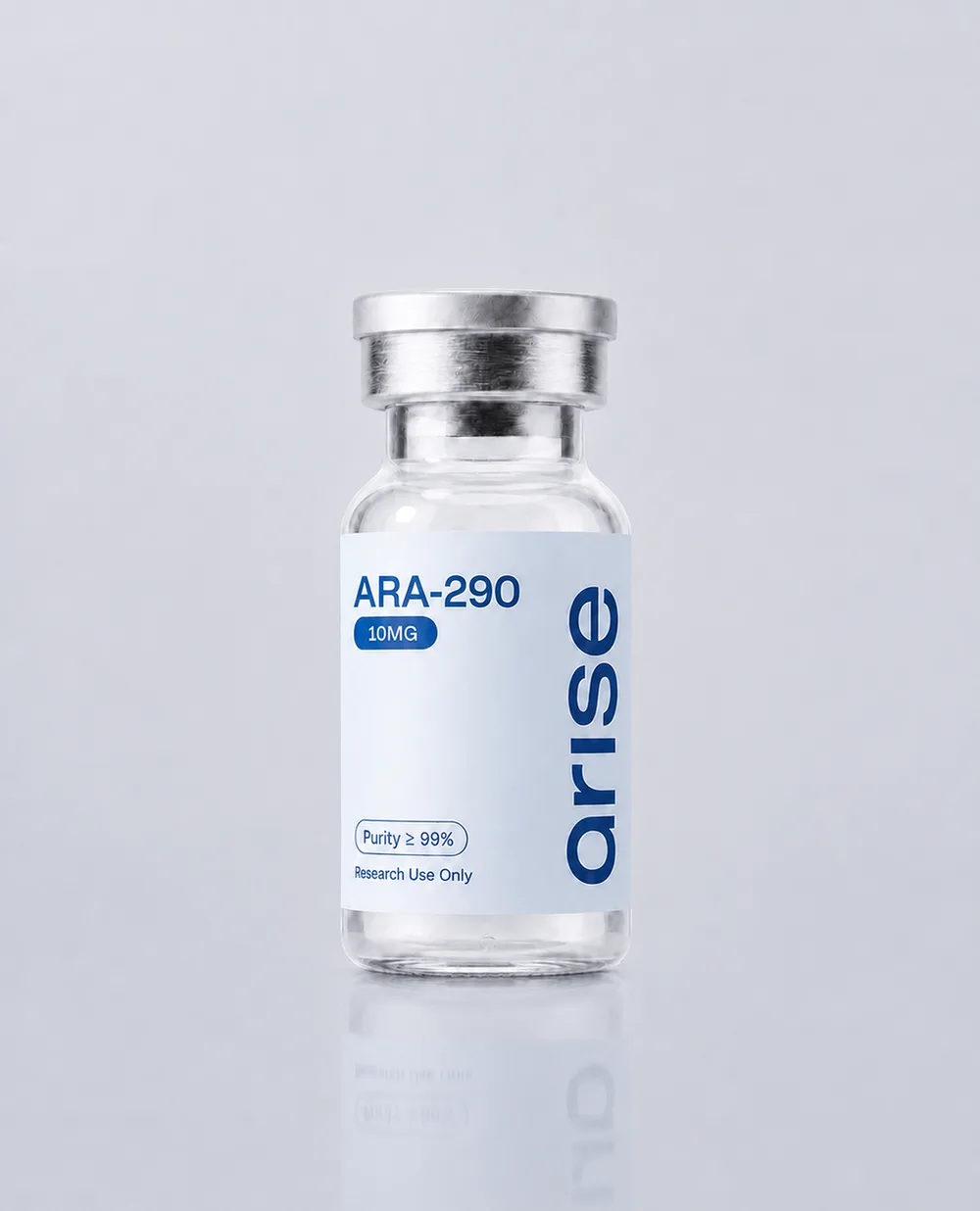
ARA-290
11-residue erythropoietin-derived peptide.
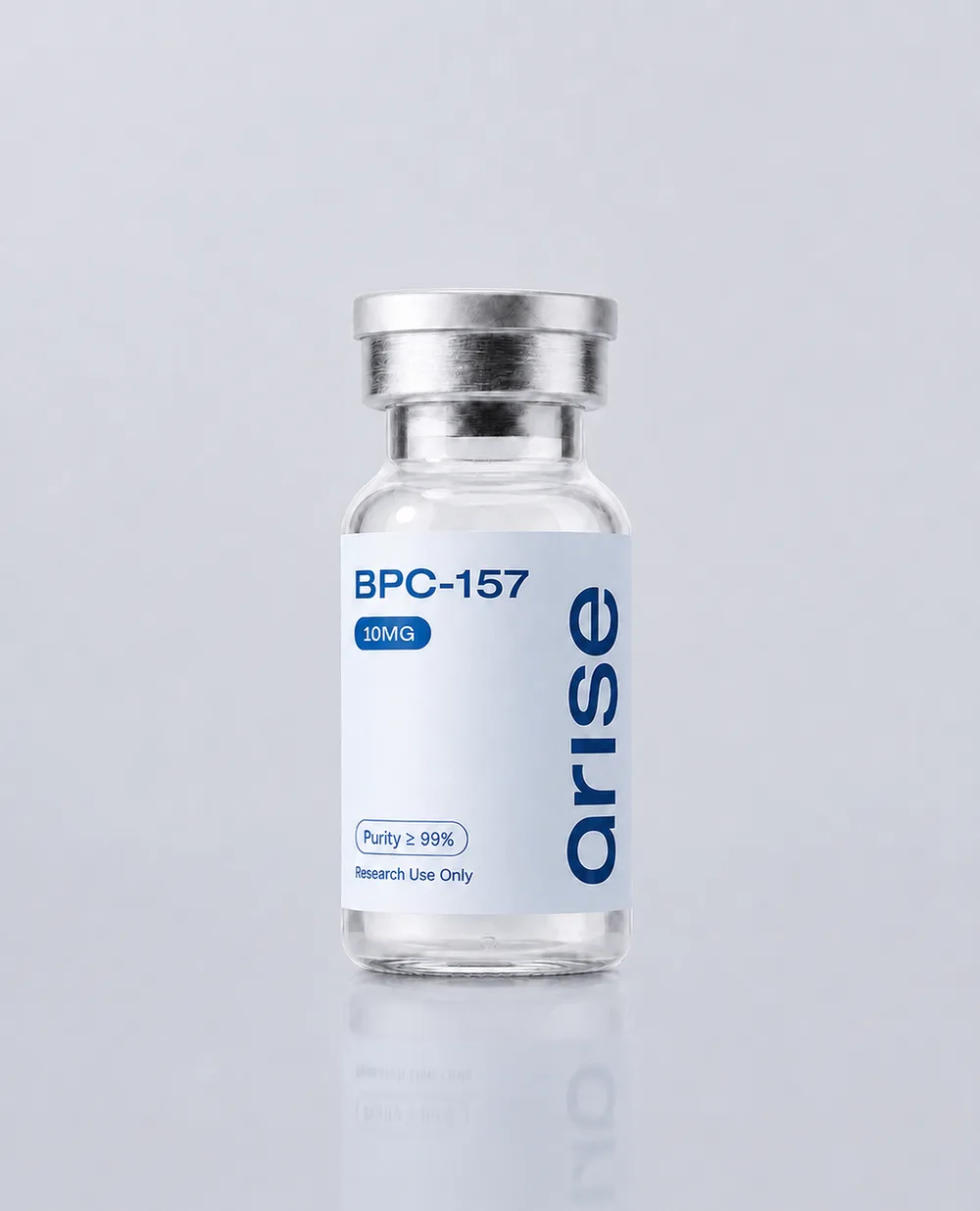
BPC-157
Synthetic 15-residue gastric pentadecapeptide.
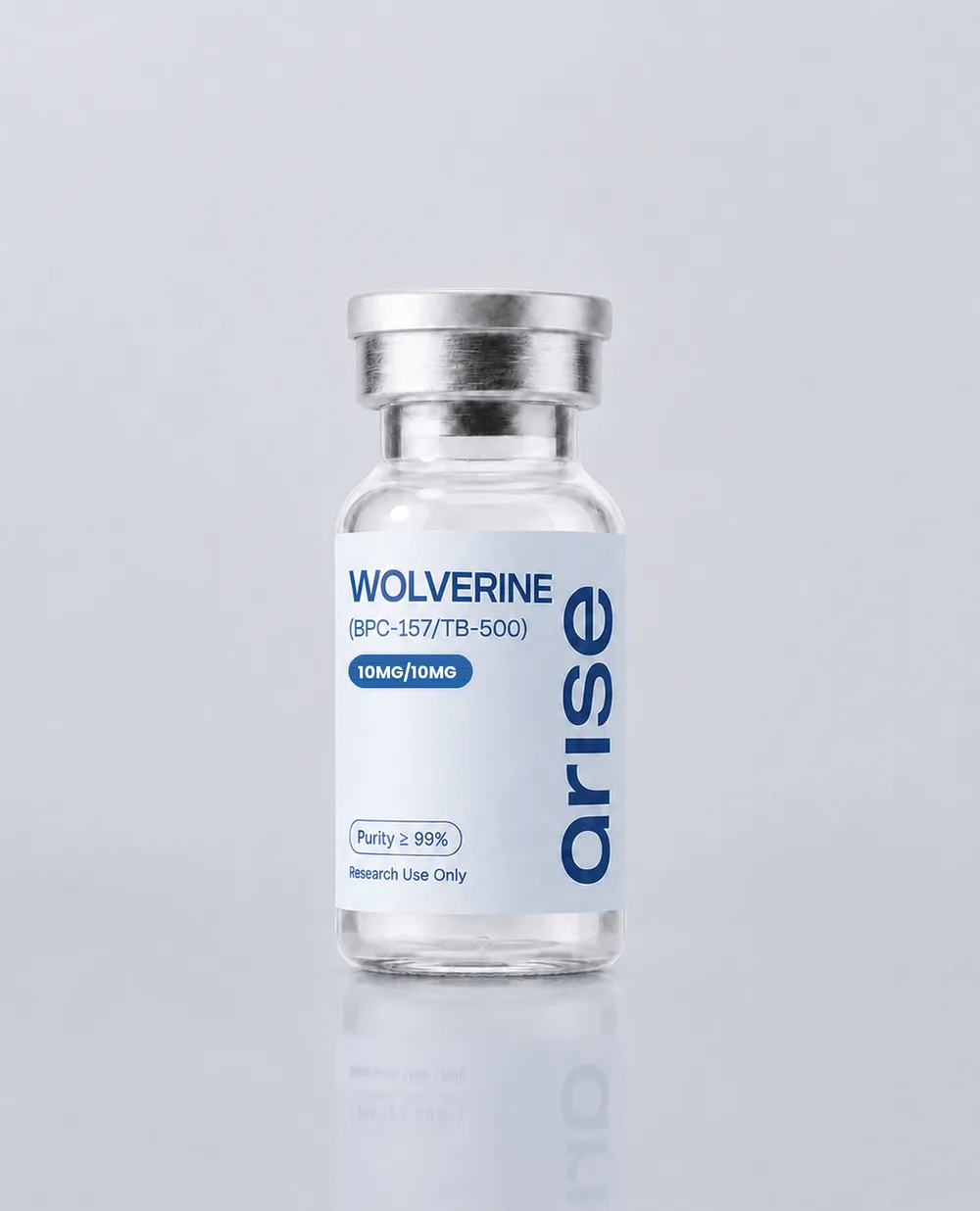
Wolverine(BPC-157 / TB-500)
Co-formulated BPC-157 and TB-500 blend.
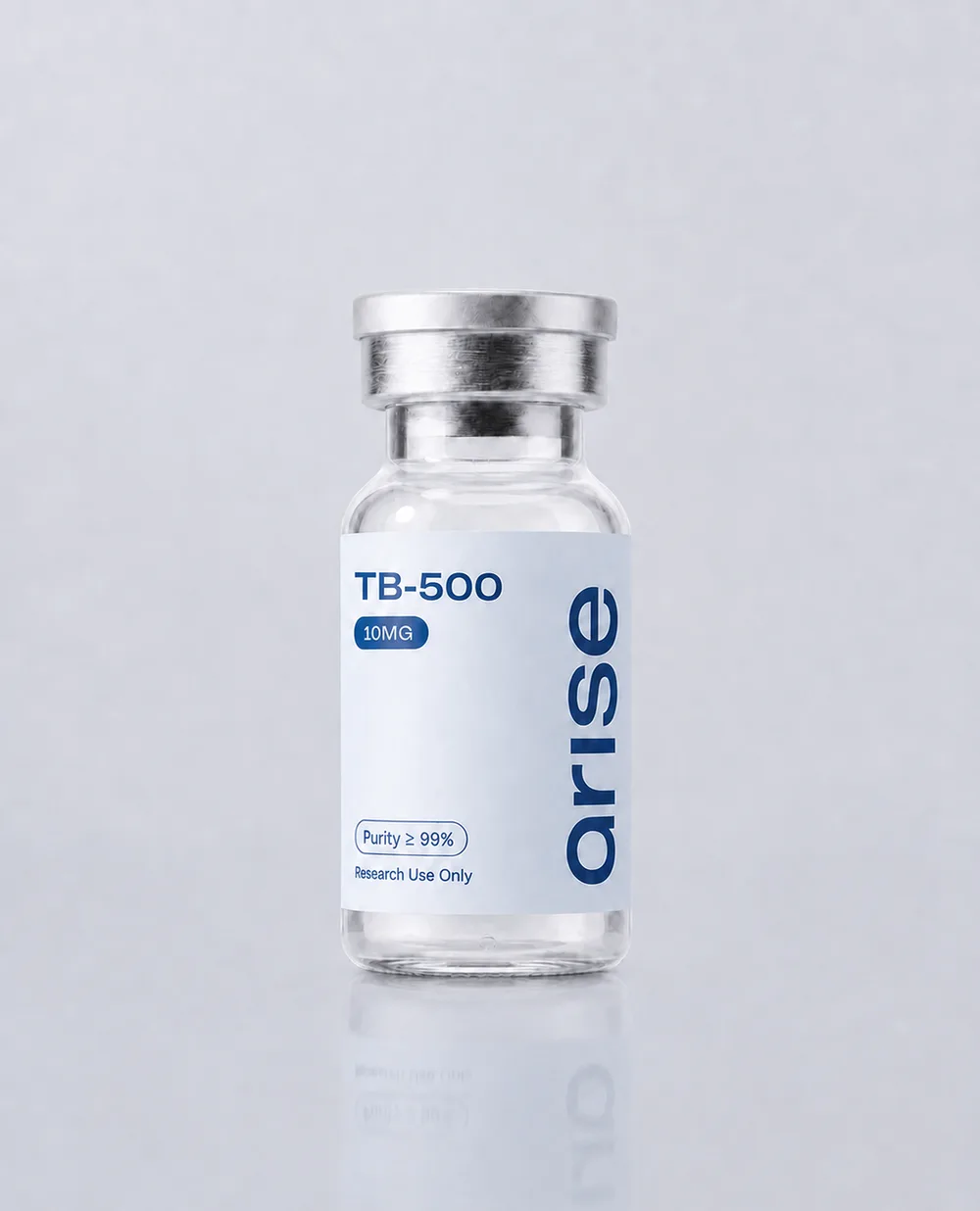
TB-500
Thymosin beta-4 active fragment.
Important research notice
Not for human consumption. This product is sold exclusively for research and educational purposes. It is not intended to diagnose, treat, cure, or prevent any disease.
This material is supplied exclusively as a research reagent for in vitro and laboratory use by qualified researchers. It is not a drug, dietary supplement, cosmetic, or medical device, is not intended for human or veterinary use, and is not intended to diagnose, treat, cure, or prevent any disease. No dosing, administration, therapeutic, or benefit claims are made or implied. Cited literature is provided for scientific reference only and does not constitute a representation of efficacy or safety in any subject.
By purchasing this product, you confirm that you are a qualified researcher and will use it in accordance with all applicable laws and regulations.